

Disputed Children
By: Giorgio Provinciali
Live from Ukraine
Kyiv — In recent hours, the Ukrainian Parliament’s Commissioner for Human Rights, Dmytro Lubinets, has?brought?to public attention a legal dispute arising from?an Italian court’s authorization of the adoption of a Ukrainian minor who was evacuated to Lecce in 2022. The child’s mother is alive and has not lost parental rights, while the child’s father is missing in action.

If the facts?reported?by the Ukrainian Ombudsman are accurate, the issue is extremely serious.?Adoption is a definitive measure that severs and replaces family ties. This is precisely why the Hague Conference (HCCH) has been?categorical:?in the event of armed conflict, protection measures other than adoption must be prioritized because minors separated from their families cannot be presumed to be orphans or automatically in need of adoption.?Until the fate of their parents or close relatives is clarified, they must still be considered part of their family. The Council of Europe is even more?explicit:?adoption should not be considered when there is a reasonable hope of reunification or when it is contrary to the wishes of the child or the parents. The UN Guidelines on Alternative Care for Children?reiterate?that?no actions (adoption, name change, or relocation far from the place of origin) that could hinder future family reintegration should be taken until all efforts to achieve a solution have been exhausted. The Ukrainian moratorium on intercountry adoptions is a protective measure?designed?to prevent the forced relocation of children from becoming a means of permanently altering their personal status. The Council of Europe?recallsthat, under Ukrainian law,?only children with orphan status or whose parents have been deprived of parental rights are adoptable, and that martial law prohibits foreign citizens from registering as prospective adoptive parents for up to three months after its termination, except for limited exceptions.
Italian law is also not neutral. Law №184/1983?states?in Article 1: 1.?The right of the minor to grow up in his or her own family; Article 8?definesadoptability as a situation of abandonment, provided that the lack of care is not due to temporary force majeure; Article 36?requires?that?foreign minors be certified as abandoned or that their biological parents consent. Even the Constitutional Court’s ruling no. 33/2025 — which opened international adoption to individuals —?reaffirmed?that?these minors remain in a situation of abandonment. In 2022, through the Commission for International Adoptions, Italy also?suspended?the assumption of new assignments to Ukraine and the Russian Federation due to the ongoing emergency.
Here, the most delicate transnational issue arises:?habitual residence and, consequently, jurisdiction.
Council of Europe Resolution 2529/2024?maintains?that?Ukrainian minors abroad should be considered present in host countries only for the purposes of temporary protection. Therefore, Article 6 of the 1996 Hague Convention would?not?be applicable, while Article 5 would?make?it?appropriate to maintain the jurisdictional center in Ukraine.?
The European e-Justice portal?offers?a contrary interpretation: for internationally displaced minors from third countries, Article 6, paragraph 1 of the 1996 Hague Convention?may confer?jurisdiction on the host state. However, even under this interpretation,?habitual residence is not merely a formal concept or a legal timetable: it is a factual notion, linked to the child’s actual center of life, the quality and stability of their placement, and the reasons for their stay.
Wartime evacuation is not comparable to voluntary migration, and the mere passage of time should not result in definitive stabilization that justifies severing filiation.?
When dealing with minors displaced by war, the law should favor reversible solutions: foster care, guardianship, and protective placement.?
Not the most irreversible of all.
It should also be noted that the 1996 Hague Convention?can?guide transnational protection, parental responsibility, and cooperation between authorities, but it?cannot?provide legal protection for adoption. Article 4 expressly?excludes?adoption from its scope, including preparatory measures. Moreover, Italian case law has already given full weight to Ukrainian protection orders: in ruling no. 17603/2023, the Court of Cassation?declaredthe appointment of a guardian by the Consul General of Ukraine in Naples effective in Italy. Article 23 of the same Convention?provides?for the automatic recognition of orders issued by another contracting state.
The compatibility of the decision with Italian law and European standards appears seriously questionable.
The Strasbourg Court has repeatedly?censured?states for the adoption or termination of family ties decided without the parents’ actual participation. In Pontes v. Portugal, it?found?a lack of sufficient reasons and regular contact; in A.K. and L. v. Croatia, because the child was?placed?for adoption without the mother’s knowledge or participation; and in Zhou v. Italy, for a?lack?of adequate efforts before considering the termination of family ties.
According?to Lubinets, similar risks would affect 82 other Ukrainian minors.?
If the formulation he?cited?regarding the mere “remote presence” of the parents truly reflected the treatment reserved for family participation in the Lecce case, the risk to the ECHR would be very serious.
If confirmed as challenged, the case would call into question not only the relationship between Italy and Ukraine but also the Italian judicial system’s consistency with the principles it claims to uphold.?
Protecting a child evacuated from war doesn’t mean exploiting their vulnerability to make their separation from their family irreversible.?
It means resisting the temptation to call “stability” what began as trauma and “the child’s best interests” what could be seen as a surrender of rights in the face of a fait accompli.
In 1.519 days of war,?we recorded over 250 videos from ground zero and wrote more than 1,500 articles.
We are doing our best to provide genuine, first-hand reports from zones where almost no press dares to go. This means living in a kill zone constantly. We take the risk, but without your invaluable support, our voices would remain unheard and silent. Without brave people sharing our articles from afar, they would remain unread. Our reports would go unseen, and our efforts would be lost. There’s still a lot of work to do here, as the people around us are also in no better situation.
We’re renewing our?fundraising campaign?and thanking everyone who joins us in helping to restore what Russia is destroying. Moving forward with only a small reimbursement for each article from a brave newspaper that believes in us is extremely challenging. That’s why we are grateful to all the kind people who support us and trust in our mission.
Even a small donation helps.
We’ll keep you updated on developments.
Thank you all, dear friends
?
被争议的儿童
作者:Giorgio Provinciali
翻译:旺财球球
乌克兰前线报道?
基辅?——?近日,乌克兰议会人权专员德米特罗·卢比涅茨向公众披露了一起法律争议:意大利一家法院批准收养一名在2022年被撤离至莱切的乌克兰未成年人。该儿童的母亲在世且未被剥夺监护权,而孩子的父亲(在战场)失踪。
(图:我与Alla在乌克兰顿涅茨克州一处荒废的儿童游乐场报道——版权所有,Giorgio Provinciali)
如果乌克兰人权专员所报道的事实属实,问题极其严重。收养是一项终局性措施,会切断并取代原有的家庭关系。正因如此,《海牙国际私法会议》早已明确:在武装冲突情况下,应优先采取除收养之外的保护措施,因为与家庭分离的未成年人不能被推定为孤儿或当然被视为需要被收养。在父母或近亲的命运尚未明朗之前,他们仍应被视为家庭的一部分。欧洲委员会更为明确:在存在家庭重新团聚的合理希望,或与儿童或父母意愿相悖时,不应考虑收养。联合国《儿童替代性照护指南》重申,在所有促成家庭?重聚的努力未穷尽前,不应采取任何可能妨碍未来家庭重归的行为,如收养、改名或远离原籍地的搬迁。乌克兰对跨国收养的暂停令是一项保护性措施,旨在防止以强制转移儿童为手段永久改变其个人法律身份。欧洲委员会提醒,根据乌克兰法律,仅具孤儿身份或父母被剥夺监护权的儿童可被收养,并且戒严期间及其终止后三个月内,外国公民不得(除有限例外)登记为拟收养人。
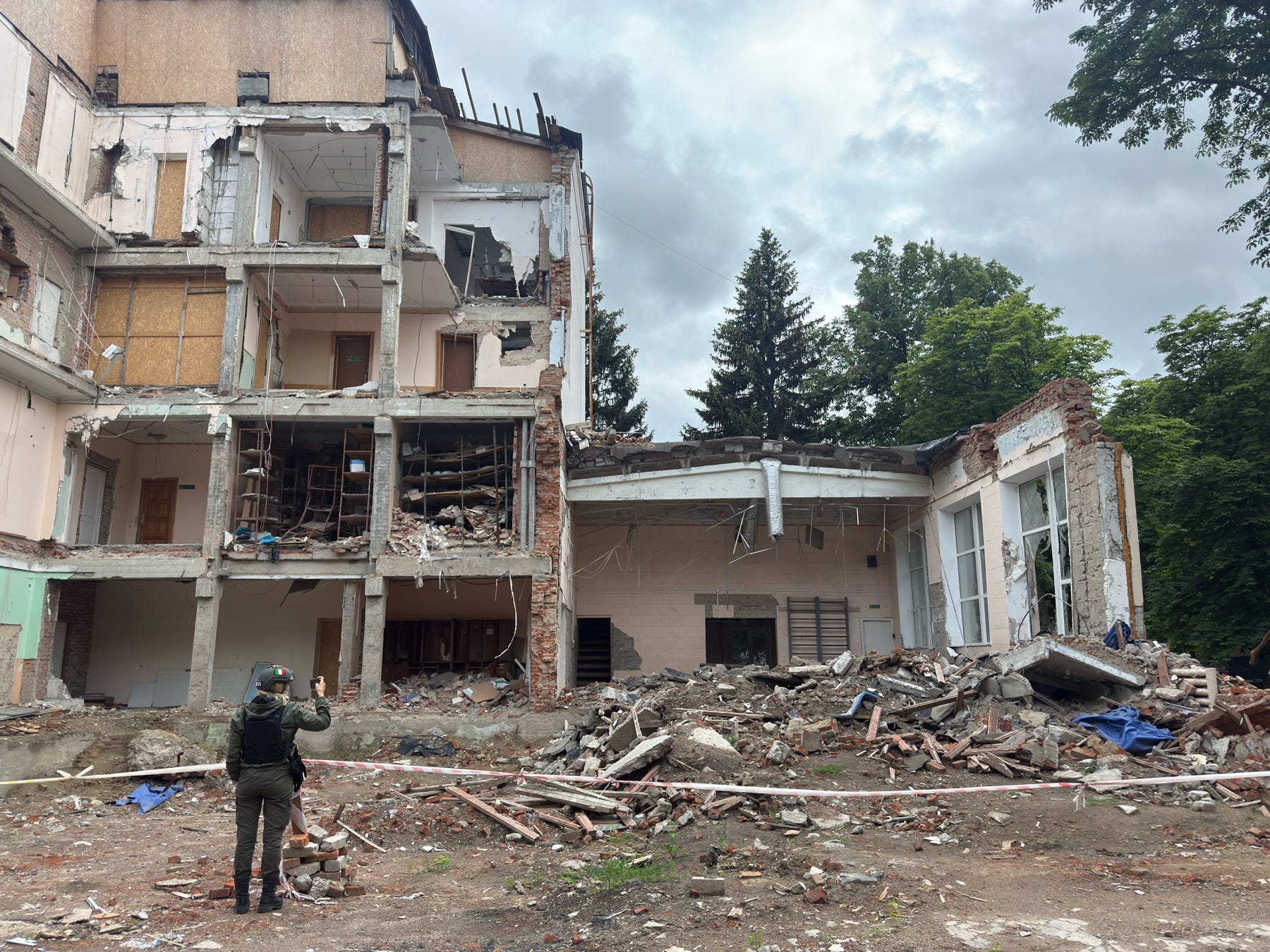
(图:我与Alla在乌克兰苏梅一所被俄方摧毁的大学废墟处报道——?版权所有,Giorgio Provinciali)
意大利法律也并非中立。第184/1983号法第一条第1款规定:未成年人有在其原生家庭成长的权利;第8条将可收养性定义为一种遗弃状况,前提是缺乏照料并非因暂时的不可抗力;第36条要求外国未成年人须经证明为遗弃或其生父母同意方可收养。即便是宪法法院第33/2025号裁定——为个人打开了国际收养通道——也重申了这类未成年人仍须处于遗弃状态。2022年,意大利通过国际收养委员会鉴于持续紧急局势而暂停了对乌克兰和俄罗斯联邦的新收养委托。
(视频:我与Alla在乌克兰尼任的一处掩体中报道,那里乌克兰学生正在学习医学——?版权所有,Giorgio Provinciali)
此处出现最为敏感的跨国法律问题:惯常居所及由此产生的司法管辖权问题。
欧洲委员会第2529/2024号决议认为,身处国外的乌克兰未成年人仅应被视为在东道国就临时保护目的存在。因此,1996年海牙公约第6条不适用,而第5条则适宜将司法管辖中心保留在乌克兰。
欧洲电子司法门户则给出相反解释:对于来自第三国的国际流离失所儿童,1996年海牙公约第6条第1款可将管辖权赋予东道国。然而即便采纳此解释,惯常居所并非仅为形式概念或法律时间表:而是一项实事判断,取决于儿童实际生活中心、安置的质量与稳定性,及留居原因。
战时撤离不可同日而语于自愿移民,时间的推移本身不应导致不可逆的稳定化,从而正当化亲子关系的切断。
在处理战争流离失所儿童时,法律应优先考虑可逆的解决方案:寄养、监护和保护性安置——而非最不可逆的措施。
(视频:我与Alla在我们探访顿巴斯受伤儿童时的报道——版权所有,Giorgio Provinciali)
还应注意,1996年海牙公约可以为跨国保护、亲权责任及当局之间合作提供指引,但并不能为收养提供法律正当性。公约第4条明确将收养及其准备性措施排除在其适用范围之外。此外,意大利判例已对乌克兰的保护令给予完全效力:在第17603/2023号裁定中,最高法院确认乌克兰驻那不勒斯总领事委任监护人的决定在意大利有效。同一公约第23条亦规定承认其他缔约国发布的决定的自动效力。
该决定与意大利法律及欧洲标准的兼容性显然存在严重疑问。
斯特拉斯堡人权法院曾多次指责各国在未让父母充分参与的情况下决定收养或终止家庭关系:在Pontes诉葡萄牙案中,法院认定缺乏充分理由和定期接触;在A.K.与L.诉克罗地亚案中,儿童在母亲不知情或不参与的情况下被送交收养;在Zhou诉意大利案中,因在考虑终止家庭关系前未采取足够努力。
(视频:我与Alla在基辅被俄方轰炸的奥赫马特德儿童医院报道?——?版权所有,Giorgio Provinciali)
据卢比涅茨称,类似风险可能涉及另外82名乌克兰未成年人。
如果他所引用的关于父母仅为“远程出席”的表述确实反映了莱切案中对家庭参与的处理,那么对欧洲人权公约构成的风险将非常严重。
若该案质疑如被确认,将不仅将影响意大利与乌克兰的关系,也将质疑意大利司法体系与其所宣称遵循原则的一致性。
保护一名从战区撤离的儿童,不应等同于利用其脆弱性使其与家庭的分离成为不可逆转。
保护应是抵制将始于创伤的境况称为“稳定”,以及将可能被视为在既成事实面前放弃权利的做法标榜为“儿童最佳利益”。
(视频:我与Alla在雅希德內曾被俄方占领者关押超过100名平民包括儿童的集中营报道——?版权所有,Giorgio Provinciali)
***
在1519天的战争中,我们从前线录制了250多段视频,并撰写了1500多篇文章。
我们尽最大努力从几乎没有媒体敢进入的地带进行真实的一手报道,这意味着我们长期生活在“杀伤区”。我们承担风险,但若没有你们宝贵的支持,我们的声音将无从传出。若没有远方的勇敢的人们转发分享我们的文章,它们将无人问津。我们的报道会被忽视,我们的努力将付诸流水。这里还有大量工作要做,周围的人们境况同样艰难。
我们正在更新筹款活动,感谢每一位加入我们、帮助修复俄罗斯破坏的人们。仅靠一家勇敢的报纸为我们每篇文章支付微薄稿酬以维持前线报道极为困难。因此,我们感激所有支持并信任我们使命的善良人们。
哪怕是小小的捐助也有助益。
我们会持续为你们更新事态进展。
谢谢大家,亲爱的朋友们?
如果你认可我们的工作,请支持我们
?
在过去三年里,自乌克兰大规模战争爆发以来,作为自由撰稿人,我们一直在乌克兰战争的所有前线进行报道…
Paypal捐款链接:https://www.paypal.com/pools/c/9oqgW5u5oE
?