Choose Strong
For Tim.


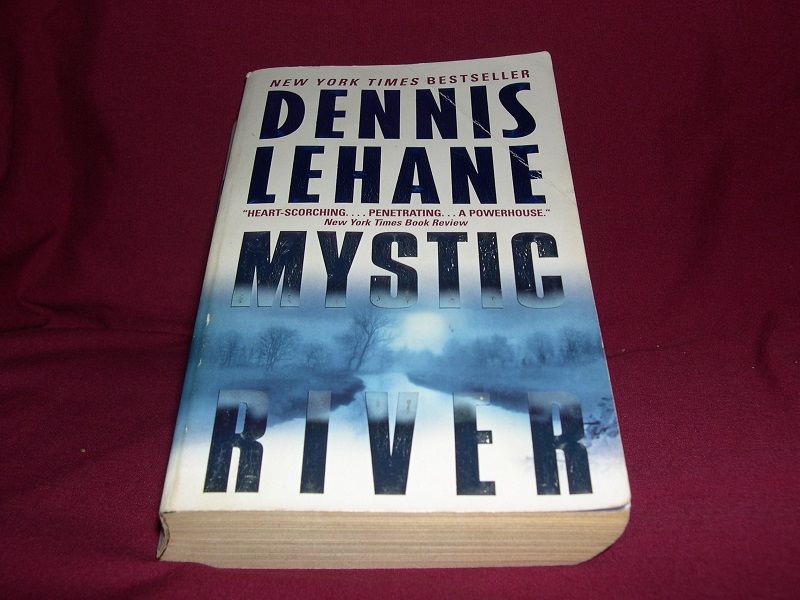
I wandered late into a Friends-of-the Library booksale and 30min later, came out
with the 448-page paperback. I had aimed at some classics but seeing nothing
familiar had to take a chance: at least it says "New York Times Best Seller" on
the cover. Years passed until I picked it up again on Monday and finished in
five days.
Three pre-teen friends were fighting on a street in the blue-collar East
Buckingham near downtown Boston when two pedophiles posing as police picked up
Dave. Four days later, he escaped from the wolves and returned a changed kid.
Fast-forward 25 years, Dave grew up to be a loving father and husband except
that he seemed lack of confidence and not able to hold on to a job. The
gangster-turned-straight Jimmy owned a corner store and Sean became a cop.
Next, the story unfolded around the brutal murder of Katie, Jimmy's 19-year-old
daughter, the night before her planned elope with her boyfriend. The same night,
Dave came home covered in blood and told his wife that he might have beaten a
man to death. Just another of his lies, she thought. Except that this time, Dave
was telling the truth, well, eighty percent at least.
Much suspense came as Dave fought his inner demon from his childhood trauma and
meanwhile people, the reader and characters, connected the dots. When Sean
finally busted the two perps who killed Katie, it only shunted him onto the next
track to chase evidence against Dave's murderer.
The book is full of twists and turns, relationships, struggles, etc. As a crime
story should be, one may say, but Lehane backs up almost every one of his major
characters with careful psychological dissection, and as a result, makes the
dramatic sound real.
On the other hand, there seem to be gaps. I do feel the author should cover why,
as he no longer fit in, didn't Dave leave or as they say, blow town. That and
maybe explain Jimmy's decade-long fear of karma after killing Ray and his sudden
oblivion of it after Katie (whom Ray Jr. killed) and Dave (whom he killed to
avenge Katie).
The phrase used in the NYT book review, "heart-scorching," was rammed home when
I read Jimmy's thoughts as Katie's killing was confirmed (p264)
I love you. I love you so much. I love you, in truth, more than I loved your
mother, more than I love your sisters, more than I love Annabeth, so help me
God. And I love them deeply, but love you most because when I came back from
prison and sat with you in the kitchen, we were the last two people on earth.
Forgotten and unwanted. And we were both so afraid and confused and so
utterly fucking forlorn. But we rose from that, didn't we? We built our lives
into something good enough so that one day we weren't afraid, we weren't
forlorn. And I couldn't have done that without you. I couldn't have. I'm not
that strong.
I've got so much out of reading this book, including even an opinion on rap:
Jimmy hated rap and not because it was black and from the ghetto--hell,
that's where P-Funk and soul and a lotta kick-ass blues had come
from--because he couldn't for the life of him see any talent in it. You
strung a bunch of limericks together of the "Man from Nantucket" variety, had
a DJ scratch a few records back and forth, and threw out your chest as you
spoke into a microphone. Oh, yeah, it was raw, it was street, it was the
truth, motherfucker. So was pissing your name in the snow and vomitting. He'd
heard some moron music critic on the radio say once that sampling was an "art
form" and Jimmy, who didn't know much about art, wanted to reach through the
speaker and bitch-slap the obviously white, obviously overeducated, obviously
dickless pinhead. If sampling was an art form, then most of the thieves Jimmy
had known growing up were artist, too. Probably be news to them. (p348)