Dr. Bill Rosehart named next President and Vice?Chancellor of the University of Waterloo
Dr. Bill Rosehart, a nationally respected academic leader, scholar, and three?time University of Waterloo graduate (BASc ’96, MASc ’97, PhD ’01), has been appointed the next President and Vice?Chancellor of the University of Waterloo. His five?year term will begin on July 1, 2026.
Dr. Rosehart brings more than two decades of senior leadership experience at major Canadian research universities, including serving as Provost and Vice?President, Academic at the University of Guelph and Dean of the Schulich School of Engineering at the University of Calgary. Across both institutions, he has led large?scale academic transformation, strengthened research and teaching capacity, and advanced student?centred, experiential learning.
For over 20 years, Dr. Bill Rosehart, has been a passionate advocate for engineering education. He always aims to create a learning and research environment that supports the growth and development of all students, faculty and staff. As Dean of the Schulich School of Engineering, he is a champion of student success, diversity and research impact.
He is a well established researcher in the area of electrical energy engineering. He has published over 100 scholarly articles, supervised or co-supervised 20 graduate students.
MARCH 9, 2026
President-Designate Dr. Bill Rosehart: Backgrounder
By University Relations
About Dr. Bill Rosehart, PhD, P.Eng, FEIC, FCAE, FCSSE
Dr. Bill Rosehart is a transformational academic leader, scholar and three?time University of Waterloo graduate who will become Waterloo’s eighth President and Vice?Chancellor on July 1, 2026. Throughout more than two decades of senior university leadership experience, he has led major academic renewal, strengthened student experience and championed values?driven institutional change.
As Provost and Vice?President (Academic) at the University of Guelph, Dr. Rosehart oversaw significant institutional transformation. He introduced a new budget model and multi-year budget planning processes to support financial sustainability and more transparent resource planning, and advanced recruitment and enrolment initiatives. He also led the launch of two new colleges — the College of Engineering and the College of Computational, Mathematical and Physical Sciences.
Prior to joining Guelph, Dr. Rosehart held numerous senior leadership positions at the University of Calgary, including over ten years as Dean of the Schulich School of Engineering. In these roles, he helped guide financial planning, led major capital projects, expanded enrolment and faculty complements, supported entrepreneurial and experiential learning, and strengthened commitments to sustainability and Indigenous engagement.
In his leadership roles, Dr. Rosehart has been a strong champion and advocate for Indigenization and equity, diversity and inclusion. At Calgary, he embedded Indigenous perspectives into core curriculum, launched an Indigenous Engineering Pathways initiative, and created new supports and spaces through close collaboration with Indigenous Elders. At Guelph, he strengthened this work by appointing the university’s first Assistant Vice?President, Academic Equity and Inclusion and supporting the introduction of new awards for Indigenous students.
An accomplished scholar, Dr. Rosehart holds BASc, MASc, and PhD degrees in Electrical Engineering from the University of Waterloo, along with executive education from Harvard Business School and academic leadership training from Harvard’s Graduate School of Education. His research focuses on the planning and operation of sustainable energy systems.
An expert in electrical energy systems, he has authored more than 100 peer?reviewed publications and supervised more than 30 graduate students. He is a fellow of the Canadian Academy of Engineering, the Engineering Institute of Canada, and the Canadian Society for Senior Engineers, and has received major honours including the Association of Professional Engineers and Geoscientists of Alberta (APEGA) Centennial Leadership Award.
As he returns to Waterloo, Dr. Rosehart brings a forward?looking vision grounded in the University’s strengths in experiential learning, interdisciplinary research, entrepreneurship and community partnership.
University of Waterloo's next president returns to his academic roots
Joe Friesenpostsecondary education reporter MAR 12, 2026
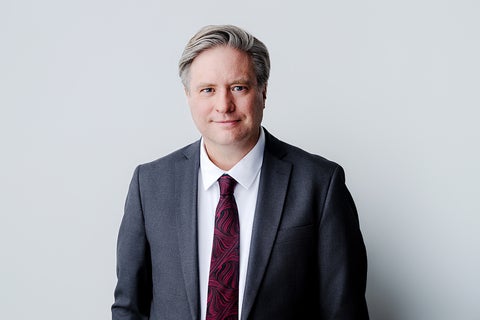
Bill Rosehart, incoming president and vice-chancellor of the University of Waterloo. Dr. Rosehart earned his bachelor’s degree, master’s and doctorate at the school.
The University of Waterloo has named Bill Rosehart its next president, the first alumnus to be selected as president since the school’s founding more than 60 years ago.
Dr. Rosehart is currently the provost and vice-president academic at the University of Guelph and before that spent a decade as dean of engineering at the University of Calgary. He succeeds Vivek Goel, whose term ends in June.
Dr. Rosehart began his university studies at Waterloo in 1991 and went on to earn his bachelor’s degree, master’s and doctorate at the school, all in engineering. His academic expertise is in electrical energy and the integration of renewables into power systems. He is the author of more than a hundred peer-reviewed papers.
Murray Gamble, chair of the university board, described Dr. Rosehart as a leader with a people-centred approach who understands the Waterloo ethos.
Dr. Rosehart paid tribute to what he described as the “bold idea” on which Waterloo was founded: “that integrating academics with real-world experience could redefine higher education and strengthen society.”
“That spirit of unconventional thinking remains its greatest strength,” he said. The university now has about 40,000 full and part-time undergraduate students and is a member of the U15 Canada group of large research institutions.
Dr. Rosehart’s father, Bob Rosehart, was also an engineer and a university president. He held the top job at Lakehead University in Thunder Bay from 1984 to 1997 and at Wilfrid Laurier University from 1997 to 2007.
This Q and A has been edited and condensed.
Q: You’re the first Waterloo alumnus to be named president. What’s it like to come back to an institution where you studied as an undergraduate?
I can tell you when the board and the senate were making their final deliberation it was very emotional for me. I didn’t realize how much it would it would hit me in that moment, but it was very special and I’m deeply honoured to be entrusted with this role.
I arrived in 1991 for the first of three degrees here at the university. Things have changed. There’s new facilities, new people. But that spirit, the willingness to do things differently, to innovate and focus on having an impact, is what I remember when I was here in the 1990s.
The University of Waterloo has grown enormously in just a few decades. Where do you think it can go?
Provincially, nationally and beyond, our job is to look at complex challenges and not just navigate through them, but look at opportunity within them. We know health systems need to change. The education and research that we do at the university will play a role in helping to advance our health systems provincially and nationally. In areas like AI and technology we’re really well positioned to not just think about the development of AI and other technologies but to think about these tools and opportunities in a very holistic way.
Has your dad passed on any lessons about university leadership?
That may have been a long conversation throughout the years. I’ve been really grateful to have many incredible mentors in my career. I believe it’s important to have courage and make decisions, but really to be people-focused and think about the community that we serve.
The University of Waterloo has a pretty significant structural deficit. How do you intend to address it?
It won’t necessarily surprise you that they didn’t go into great detail about that in the recruitment. The province did make a very significant announcement two weeks ago to increase funding that has certainly put Waterloo in a different position, but I don’t have all the details yet. The university also implemented a multiyear budget plan to move out of a structural deficit in a year or two. My understanding is that has been accelerated because of the announcement.
International students have been a major source of revenue at Waterloo, as everywhere in Canada. What proportion of Waterloo students do you think should come from abroad?
I’d like to step away from the financial piece for a moment and think about the value of having an opportunity to work with, and become friends with, students from across the country and around the world. That is extremely exciting. A lot of the institutions in the province that I think are finding the right balance tend to have, plus or minus, about 15-per-cent international students.
Canada is navigating a shifting international environment as a middle power. What opportunities and challenges do you see for Waterloo?
I think it’s really important that Waterloo and other research-intensive comprehensive universities speak out about the incredible, positive impact that universities have. It’s an opportunity for Canadian universities to ensure that leaders, not just in Canada but around the world, really see and understand why supporting and investing in universities can be transformational for their communities.
Five years from now how will you judge whether your term has been a success?
To me, it’s about broadening the student experience. Not just around expanding co-operative education, but really looking at the breadth of experiential learning opportunities for students to build more connection and impact in our community. And in particular to advance what the university is doing in interdisciplinary areas like health, society and technology futures.
Q&A: Meet University of Waterloo's new president, Dr. Bill Rosehart
Rosehart is a three-time graduate of the university and will the first alumnus in the role. He previously served as provost and vice-president, academic at the University of Guelph and as dean of the Schulich School of Engineering at the University of Calgary. (Submitted by the University of Waterloo )
comments
The University of Waterloo has announced that Dr. Bill Rosehart, an experienced academic leader and three-time graduate of the university, will become its next president and vice-chancellor.
Rosehart, who begins a five-year term on July 1, is the first alumnus take on the role. He will replace outgoing president Dr. Vivek Goel.
Rosehart brings more than two decades of senior leadership experience at major Canadian universities. Including serving as provost and vice-president, academic at the University of Guelph and as dean of the Schulich School of Engineering at the University of Calgary.
Rosehart joined CBC K-W's The Morning Edition host Craig Norris to talk about what he will bring to the role.
This interview has been edited for length and clarity.
Craig Norris: Why did you want to be president of the University of Waterloo?
Bill Rosehart: The University of Waterloo is without a doubt one of Canada's most impactful institutions. We think about where it stands in cooperative education, where it's not just a national leader, it's a global leader.
It's a powerhouse of research, scholarship, innovation and entrepreneurship that has had such an incredible impact on not just the region of Waterloo, but the whole country. To have the opportunity to be part of the energy and all things that really define Waterloo, is just so exciting.
Norris: How do you think the fact that you're a UW grad will colour your leadership?
Rosehart: I come into this position with just an incredible amount of pride being a three time Waterloo grad. I hope it creates a stronger sense of connection with the students, with the staff and with the faculty.
It gives me some unique perspectives combined with the fact that I went away for a couple of decades. I think that brings a really powerful mix into how I will be able to work with people and leaders across the campus to take Waterloo to where it goes next.
Norris: University of Waterloo highlighted that you are interested in experiential learning. You said that UW is well known for co-op programs, where students get real-world, on-the-job experiences in between semesters on campus. Do you see experiential learning expanding beyond that or evolving even further?
Rosehart: Absolutely. When we we think about the future state of university, a lot of it will come down to a broader definition of experiential learning. Co-op is absolutely critical in my view, for student experience. Coming out of your degree with work experience really differentiates and positions students to transition to their career very successfully.
But experiential learning goes beyond that. It speaks to opportunities for students to be involved in teams, clubs and student leadership, where they can really develop into future citizens and really gain experiences in what is ultimately a safe learning environment that can have an incredible potential for how they become leaders in our community.
Norris: This is a turbulent time for post-secondary education. What do you think needs to happen to make sure that universities are able to continue to contribute and function?
Rosehart: I am a very proud advocate of the role that universities play in our regional, provincial and national landscape.
One of the things that will be on my list is to take more opportunities to tell that story, to make sure that the people across the country better understand the positive impact of the university, so that policy decisions are made with a very full understanding of the incredible impact that universities have, certainly on our students, but also in the broader community.
Waterloo was founded on a bold idea: that integrating academics with real-world experience could redefine higher education and strengthen society. That spirit of unconventional thinking remains its greatest strength, and I am excited to return to help build on that foundation
Learn more about Dr. Rosehart
Dr. Rosehart impressed the Presidential Nominating Committee with his genuine, people-centred approach to leadership and his clear understanding of what makes a comprehensive university thrive. As a three-time Waterloo graduate, he understands the ethos of our institution.
Send your well wishes to the president-designate
Help us welcome Dr. Rosehart to the University of Waterloo community by sharing your well-wishes through this form:




 Bill Rosehart, incoming president and vice-chancellor of the University of Waterloo. Dr. Rosehart earned his bachelor’s degree, master’s and doctorate at the school.