暖冬cool夏
这里一年四季温暖如春,没有酷暑没有严寒......


女儿今年三月搬去纽约,成为了一名New Yorker。虽说搬迁之前她去过纽约很多次,但如今身份不同了,感受自然也不同。
某人三月初去纽约帮女儿搬家,回来后跟我说,纽约有什么好,又挤又脏又贵,冬天又冷,想不明白为什么年轻人都想往那里跑。就像他自己当年并没有那么喜欢北京一样,生活嘛,不如加州不如杭州,既热闹又安静,既modern又有history。我回应说,我们老了,落伍了,纽约一定有它的魅力所在。
一个多月后,当某人在电话里问女儿,“。。。那Overall, so far, is New York below or above your expectation? 女儿没有犹豫地回答道的, “above expectation“.
然后她说起了这一个多月里的认知和所见所闻:
- “纽约的Met是免费对纽约人开放的。”
- “MoMA第一年送面值$110的会员卡,第二年收50%,每个周五免费,但是要提前预约。”
- “纽约的画画课老师水平更高,办班历史悠久,要求的也不同,画油画不让用铅笔打底稿。今天(4/17)是我第一次画 still live model“
- “纽约有钱人多,也处处可见讨生活的穷人。城市也脏,像Chinatown。不能理解的是,大家在抱怨城市脏的同时,又不想努力改变现状。”
- “我常常在公寓附近看见从非洲来的黑人推着婴儿车在大街上走,婴儿车里坐的是白人的小孩。”
- “Canal Street附近会看见黑人在兜售廉价物品,有些是中国产的东西。然后看见城管来了会拖着大包小包拼命跑。”
- “有时还看到长长的救济队伍,队伍里不乏年长的亚洲面孔/中国面孔的老人。他们的孩子难道不管他们父母的衣食温饱?”
- “我以前公司的白人同事,费劲周折,等六个月,从人手里买Chanel的A货包包,说那上面的皮是Chanel的真皮。”
- “纽约人不喜欢大家搬迁到他们这座城市,人流的涌入只会让这座城市更拥挤,房租更贵。以前在西雅图住,西雅图人不喜欢加州人搬迁到西雅图,现在看来纽约人也不喜欢,据说他们尤其不喜欢中西部的人(midwesterners),对加州来的人稍微友好一些。
- “那是因为加州有高科技有硅谷有new money?” 我笑着问,脑海里立刻想起九十年代的上海、广州、深圳。。。
- “纽约这座城市就像上海,繁华现代。前两天(四月中)的气温高达80多度,让人想起北京、上海的夏天。”
- “纽约也有做批发的,让我想起去年去广州时看到的繁忙的批发市场。”
- “妈妈你知道bridge and tunnel这个表达吗?你去查查。简单的说就是,纽约城市中心每天会迎来从各方穿越bridge and tunnel赶来上班的人。纽约人把他们称之为bridge and tunnel people
听到这里,我心里很高兴自己带她去过北京上海广州这几座城市,让她今天能有这样的比较和延伸(relay)。她不知道的是,城管驱赶无证小贩的行为在九十年代的中国很常见。她也不会知道当年上海人称所有上海之外的中国人为“乡下人”,浦西的看不起浦东的,“上只角”的可能看不起“下只角”的(不知道有没有下只角:),就像纽约人coin了bridge and tunnel这样的表达一样,人与人生而平等又不平等,中西文化看似不同,又因着相同的人性相通。
想起她刚到纽约时的迷茫,问自己为什么要来纽约,短短一个多月,一句“above the expectation“已经说明了其中的转变,还有她脸上散发着平日里不常见的光亮和平和,也让电话另一头的我宽慰不少。
她其实也是某种程度上的“北漂”,中国八九十年代去北京闯荡的那批人。
时代不同了,一代人与另一代人的命运不同又相同。想起自己,不也是离家最后漂到美利坚了吗?或许有一日我会叶落归根,但是我庆幸我这棵树接受了异域四季的阳光,变得高大,看见了更辽阔的风景,也希望女儿未来的路越走越宽,希望纽约、世界会一直处在above and beyond her expectation的状态里。
看着她滔滔不绝,我提了一句,“你可以把纽约的所见所闻写日记一样记下来。”
“妈妈,你先写。”
女儿知道我有博客,那一刻我也庆幸自己可以身体力行,也因此写下这些对话,希望有朝一日她能自己提起笔,写纽约。
越剧《天上掉下个林妹妹》
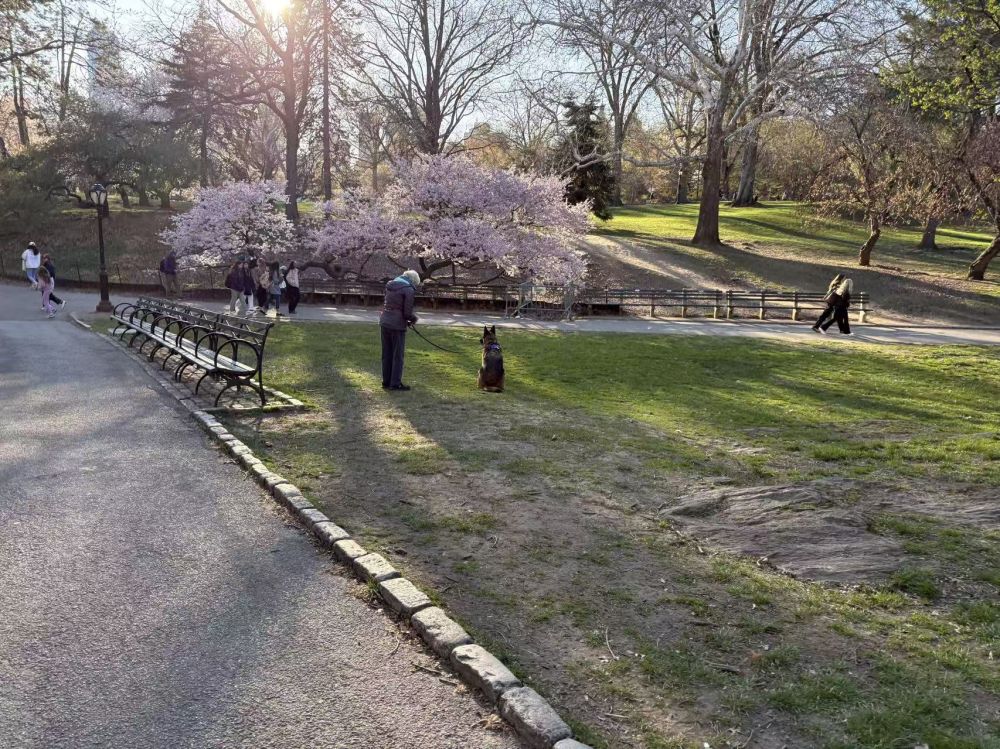
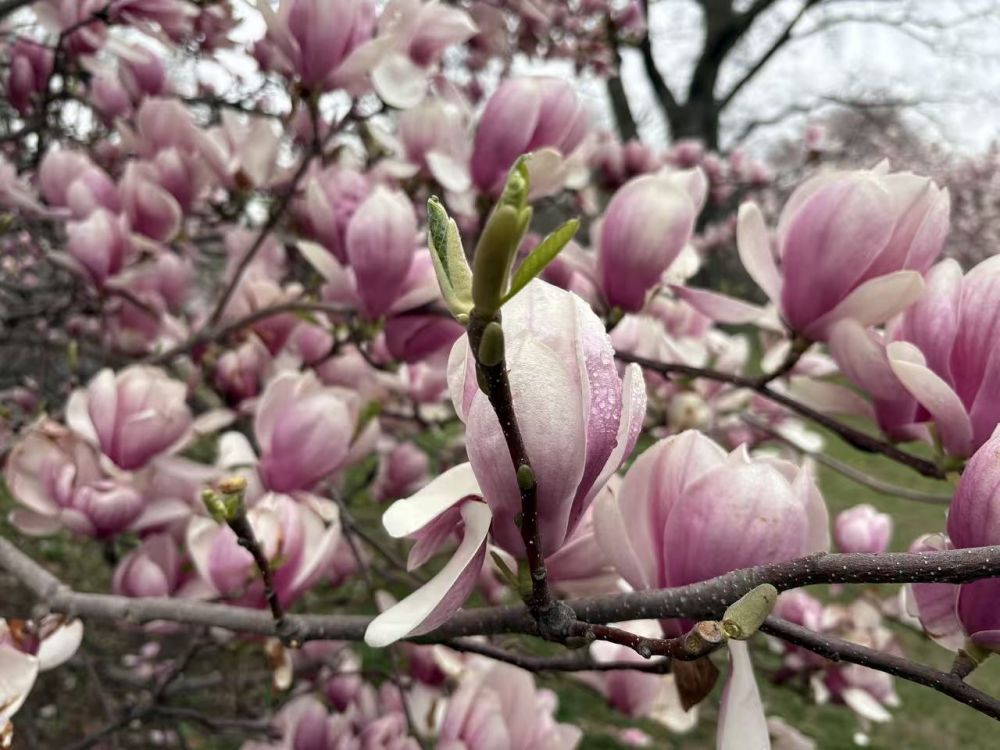
女儿拍的两张照片,中央公园的樱花。白玉兰。
J becomes a New Yorker since her move in March, a city that draws young people. As expected, the apartment she moved in is small, old and expensive. The creaky wood floor even slanted a bit that table legs on one side needs a cushion to stay balanced. The building is said to be built in 1900s, with no elevator but a narrow corridor with stairs. A metal emergency stairs zigzag outside.
When J arrived on the first day of March, it was still freezingly cold winter. But the room temperature inside the building however was set around 76F, centrally controlled by the building, in compliance with the city's regulations. J had to leave the window open, even at night, to moderate the heat.
Then she caught a cold and was sick for weeks.
On Aril 17, during a phone conversation with J, she told us that the temperature in the last few days shot up to 80s, reminding her of Shanghai's sultry summer. It lasted for three days before a thunderous rain cooled it down.
J was leaning on her bed, her eyes glistening, her face glowing under the light, and her mouth flowing out her recent explorations of the city. She said she just got off from the art classes (she took two nightly art classes per week and planned to reduce to one when summer comes.), passing streets that are still thronged with people at 10 pm. She seemed to be in good mood, and that quickly spread over to me at the other end of the phone.
she babbles on with more of her discoveries while we were having late dinner in the west coast.
-- In her rich neighborhood area, she saw African nannies frequent around with white babies in the baby strollers.
-- Flushing is almost on the edge of NY, and there are lots of Chinese there.
-- Chinatown is just another dirty place, as dirty as New York looks, if not dirtier.
-- The line queued up for food distribution is long and slow. Among them, some Asian elders were patiently waiting in the cold. Why their offspring, who must have thrived, do not support them. Some Cantonese cannot speak English, like what she met in Hongkong last November. How could they survive, not speaking the language?
-- Her prior co-worker purchased a high-end fake Chanel bag from a vendor on Canal Street. She waited for more than six months before, going through various venues to avoid the customs.
-- MoMA gives out the first year admission free with a value of $110. Afterwards, you get 50% discount for annual admission.
-- Met is free to all New Yorkers.
-- The weather there is similar to Beijing, but citywise, it is more like Shanghai and Guangzhou, modern and vibrant.
-- New Yorkers don't actually welcome movers from other states. "It's already very crowded here, and more immigrants will only push the rent higher."
-- New Yorkers don't like mid-westerners. But CA people are on a better receiving end.
Hearing this, I quipped. "Is it because CA has more 'new' money? I then went on with a brief stories of how people in Shanghai, after the skyrocketing development in the South in 1980s-90s, were challenged and how their egos were eclipsed by richer Cantonese, as well as Shenzhen, China's silicon valley, which leapfrogged to the front." She nodded. Our last November's visits of the three cities are still fresh, and the bustling streets in Guangzhou impressed her the most.
"Mom, do you know the expression of 'bridge and tunnel'?" When my response was negative, she pull off
"You should write them down in journals, and one day you may write a book about New York." said I.
"I should." She winks at the idea. "You can write them down in your blog, Mom."
Edited by ChatGPT:
J became a New Yorker after her move in March—a city that naturally draws young people. As expected, the apartment she moved into is small, old, and expensive. The wooden floor creaks and even slopes slightly; one leg of her table needs a cushion underneath just to stay level. The building dates back to the early 1900s. There is no elevator, only a narrow corridor with stairs, and a metal fire escape zigzagging down the outside.
When J arrived on the first day of March, it was still bitterly cold. Yet inside, the building’s centrally controlled heating kept the temperature around 76°F, in compliance with city regulations. She had to leave the window open—even at night—to make the room bearable.
Then she caught a cold and was sick for weeks.
On April 17, during a phone call, J told us that temperatures had suddenly climbed into the 80s over the past few days, reminding her of Shanghai’s sultry summers. The heat lasted three days before a thunderstorm finally cooled the city down.
She was leaning against her bed as we spoke, her eyes glistening and her face softly lit. Her voice carried an easy excitement as she shared her latest discoveries. She had just come back from one of her evening art classes—she takes two each week but plans to cut back to one when summer arrives. Even at 10 p.m., the streets were still crowded with people. Her good mood traveled effortlessly through the phone and lifted ours as we sat down to a late dinner.
She went on, sharing more of what she had noticed:
— In her affluent neighborhood, she often sees African nannies pushing white babies in strollers.
— Flushing feels like the edge of New York, with a large Chinese community.
— Chinatown, she says, is just another gritty part of the city—perhaps even dirtier than the rest.
— She saw long, slow-moving lines for food distribution. Among those waiting were elderly Asians, standing patiently in the cold. She wondered why their children—who must have found success—were not supporting them. Some Cantonese speakers she encountered could not speak English, much like people she met in Hong Kong last November. How do they manage daily life without the language?
— A former coworker bought a high-end fake Chanel bag from a vendor on Canal Street, waiting more than six months and navigating various channels to avoid customs.
— MoMA offers free admission for the first year (a $110 value), followed by a 50% discount on annual membership.
— The Met is free for New York residents.
— The weather reminds her of Beijing, but the city itself feels closer to Shanghai or Guangzhou—modern, energetic, and constantly in motion.
— She’s heard that New Yorkers don’t particularly welcome newcomers from other states: “It’s already crowded, and more people just drive rents higher.”
— Midwesterners, she says, are not especially favored, while Californians receive a warmer reception.
Hearing this, I joked, “Is it because California has more ‘new money’?” I went on to tell her how, in Shanghai, people once felt overshadowed by the rapid rise of southern cities in the 1980s and 1990s—how wealth in Guangdong reshaped social dynamics, and how Shenzhen leapfrogged ahead as China’s Silicon Valley. She agreed; our visit last November to those three cities was still fresh in our minds, especially the vibrant streets of Guangzhou, which had impressed her the most.
“Mom, do you know the expression ‘bridge and tunnel’?” she asked.
I admitted I didn’t, and she began to explain.
“You should write these things down,” I said. “One day, you could turn them into a book about New York.”
“I should,” she replied with a playful wink. “Or you can write them in your blog, Mom.”


你说的问题或许带有普遍性,一种可能是这些老人以前苦,节约惯了,加上爱占小便宜,导致他们这么做。但是如果穿名牌背名牌包包再去领福利就过分了,但愿他们的下一代会提醒他们,能有所改进。
谢谢淡然的留言,你的总结高度高!周末快乐!
菲儿的女儿一毕业就去了纽约,应该对纽约了解更多更深,愿我们的女儿都能喜欢纽约、找到自己的位置,活出更好的自己!法拉盛我2023年圣诞去过,大街上吆喝声、摆摊的人真热闹,让我顿时感觉回到国内了:)不过餐饮这些倒是好吃又便宜。谢谢菲儿的临帖,刚回来一定很累吧,你好好休息吧。周末快乐!
"有时还看到长长的救济队伍,队伍里不乏年长的亚洲面孔/中国面孔的老人。他们的孩子难道不管他们父母的衣食温饱?”,这一段我也深有感触。我上班附近有两个慈善机构,中午出去散步常常看见领救济的队伍,八、九成都是亚洲面孔的老人,听口音就是中文。他们彼此都认识,一边排队一边聊天,穿着干干净净,甚至还有穿名牌,背名牌包的。可他们就在那儿,等着领一份免费午餐,或许不止一份,因为他们背包又拎包,或推着买菜的小车。我每次路过也在想:他们的孩子知道吗?是不管,还是管不了?还是老人们自己想占便宜?这个问题我没有答案,但每次看见心里都像被什么东西轻轻硌了一下。
同祝贺暖冬开博十周年,我也过十年了,很喜欢读暖冬的文,总是颇有同感和收获,很高兴我们一起能在文城同行。
好巧,我们也才去了中央公园。纽约是个年轻人追梦的地方,恭喜暖冬的女儿!
不过这次在法拉盛,真是有点吃惊,感觉有点乱,人多,杂。像回到了中国,又有点不像。比我们前几年在纽约看到,好像有点不太一样,也或许是自己变了。:)
问好等等和所有的朋友们!
纽约是一个很独特的城市,我认为,她是美国唯一称得上大都会,完全可以依赖公交的城市,值得在那里生活体验一段,尤其是对年轻人。祝福冬妹妹的好女儿,期待更多精彩的分享。
是啊,我一直是支持孩子走自己的路,虽然从心底里,我希望她不要离得太远,但是这是她自己的人生,自己的路,我们尊重她的选择,也觉得她的决定是对的。
雁荡山我小时候去过,现在几乎是没有什么印象了,也希望自己以后退休后有更多的时间可以在国内到处看看走走。 江南的春天特别绿特别润,希望我们以后都会有很多机会享受春天的美好!
再谢等等!祝周末快乐,五月快乐!
纽约真是一个年轻人最爱的地方,虽然我感觉平平,但很可能是因为我没有居住在那里,毕竟常住居民和过客的心情及体验是很不同的,对年轻人来说,纽约可能就是一个年轻时必须去拼去生活去感悟的朝圣之地,就如同曾经的我们,总想着要去一个更广阔的地方大展拳脚实现梦想一样,这样的梦想是众多立志要闯荡一番的年轻人都向往的,你女儿的选择是对的。
我把你这三篇文放到一起歪楼了,看到你拍的雁荡山照片,挑一个春天回去看看,到处春意盎然花团锦簇,雁荡山更是明丽秀美,不然琅琊榜怎会在那里取出仙境一般的景致。暖冬的歌配上这秀丽山水,美不胜收。
谢谢你的同感和input!阿立周末快乐!
我在美语论坛里就提到当年红极一时的《北京人在纽约》,“如果你爱/恨一个人,送他去纽约:),看来纽约真是招人爱招人恨的地方。我不知道自己会不会一直写下去,那要看J会不会一直有材料提供。希望吧,如果能通过她那双fresh eyes看纽约,真是可以多写。希望借此母女之间有更多的交流。
你还几度病怏,赶紧抱抱Oncemm! 马上五月了,记得你的“五月天”,你笔下的Hudson河,愿Oncemm垂目间,春暖花开!提前祝五月好!再祝安康吉祥!
Emmy 好像两边都可以,但是不管在哪边,都是喜欢大城市 :)
纽约啊纽约,大概也是让人或爱、或恨,就像高尔夫:You either love it, or hate it.
米国佬如此评价纽约:
If you love someone, send him to New York. If you hate someone, send him to New York.
颇有点哲理的玩笑话? :-)))
我大概也像暖冬描述的“某人”:纽约有什么好?。。。不如加州不如杭州 :-))))))
今天(4/17)是我第一次画 still live model____
哇塞,女儿开始了学习绘画的新阶段了!看来女儿的这个爱好将成为她在纽约新生活的另一个充满激情活力的窗口!也非常期待暖儿展示女儿的新画作。
+1 热爱自己居住的城市的人是幸福的, 祝J在纽约早一日找到家的感觉。
也顺便问蘑菇好。