When The World Met Mr. Darcy? | Pride & Prejudice (1995) FULL EPISODE 1 | BBC Playback.
The list of Elizabeth Bennet's characters and behaviors attracts Mr. Darcy.
Mr. Darcy is drawn to Elizabeth Bennet not by convention or advantage, but by a distinct constellation of character traits and observable behaviors. The following qualities are explicitly shown—rather than merely asserted—in Pride and Prejudice:
Elizabeth Bennet: Traits That Attract Mr. Darcy
1# Intellectual Liveliness
Elizabeth thinks quickly, speaks precisely, and engages Darcy as an equal. Her wit challenges him; she does not flatter or defer.
#2 Moral Independence
She forms her own judgments—even when they contradict social pressure or Darcy himself (most notably in her refusal of his first proposal).
#3 Honesty and Directness
Elizabeth speaks truthfully, even when uncomfortable. Her critique of Darcy’s pride becomes a catalyst for his moral self-examination.
#4 Self-Respect
She refuses to trade dignity for security or status. Her rejection demonstrates that her values are non-negotiable.
#5 Emotional Discipline
Elizabeth feels deeply but is not governed by impulse. She can revise her opinions when confronted with evidence—an intellectual humility Darcy comes to admire.
#6 Playful Wit and Irony
Her humor is sharp but not cruel. Darcy is intrigued by her ability to laugh without malice.
#7 Observational Insight
She reads people carefully, notices inconsistencies, and responds thoughtfully—qualities Darcy recognizes as rare.
#8 Authenticity
Elizabeth is never performative. She is the same person in drawing rooms, muddy fields, and moments of confrontation.
#9 Moral Courage
She challenges authority figures (Lady Catherine, Darcy himself) when principle demands it.
#10 Growth Capacity
Crucially, Elizabeth is capable of self-correction. When she realizes her misjudgment of Darcy, she changes—not defensively, but sincerely.
Why This Matters to Darcy
Darcy is not merely attracted; he is transformed. Elizabeth represents:
A mirror to his flaws
A standard he must rise to
A partner who engages his mind and conscience, not just his status
In Austen’s moral architecture, Elizabeth does not benefit Darcy’s rank—she refines his character. That is the true basis of his love.
***
Is Mr. Darcy the richest among them?
Short answer: yes—Mr. Darcy is the wealthiest principal character in Pride and Prejudice.
Longer, precise answer below.
Mr. Darcy’s Wealth (Canonical)
Income: ~£10,000 per year
Estate: Pemberley, Derbyshire (large, old landed estate)
Status: High landed gentry; socially just below the peerage
In Regency England, an annual income of £10,000 places Darcy among the top fraction of one percent. He is not merely “comfortable”—he is exceptionally rich by the standards of the novel.
How He Compares to Others
Mr. Bingley: ~£4,000–£5,000 per year
Wealthy, but roughly half Darcy’s income, and his fortune is largely invested (not tied to an ancestral estate).
Mr. Bennet: ~£2,000 per year
Respectable but modest, supporting a large family.
Colonel Fitzwilliam: Well-connected but not wealthy; explicitly dependent on marrying money.
Lady Catherine de Bourgh: Very rich, but her wealth is largely represented through her estate (Rosings) and social power rather than stated income; Darcy still outranks her personally in annual income.
Why Darcy Feels “Above Everyone”
Darcy’s distinction is not just money, but the combination of:
Income (cash flow)
Ancestral land
Social pedigree
Personal independence
That combination is rare—even among the wealthy characters.
Bottom Line
Mr. Darcy is the richest male character in the main cast and one of the wealthiest figures in Austen’s fictional world.
Elizabeth does not “marry up” slightly—she marries into elite landed wealth, which makes the emotional and moral arc of Darcy’s character all the more central to the novel’s power.
**
Mr. Bingley married whom in the end?
Mr. Bingley ultimately marries Jane Bennet.
Their marriage is presented as a happy and well-matched union: Jane’s kindness and steady temperament complement Bingley’s good nature and easy disposition. Socially, it is also an excellent match—Jane gains financial security, while Bingley gains a wife admired for her beauty and character. Importantly, their relationship serves as a gentler parallel to Elizabeth and Darcy’s more complex courtship, reinforcing Austen’s theme that mutual respect and affection, not just wealth or status, are the foundation of a successful marriage.
8**
***
The Moment Lizzie Fell For Mr Darcy ? | Pride & Prejudice (1995) FULL EP 4 | BBC Playback
Elizabeth Bennet Considers Two Suitors | Pride & Prejudice (1995) FULL EPISODE 2 | BBC Playback
This depiction of Mr. Collins (Bennet's sister's cousin) really captures how silly he is.
The actress Jennifer Ehle portrays Lizzie Bennet as a considerate and caring woman. I have so enjoyed watching this version of Pride and Prejudice. Thanks for posting this on YouTube.
The Lizzie Bennet Diaries has given me a new understanding of Charlotte's character. She's very much a rational, logical individual and a near-and-dear friend to Lizzie.
Lydia:
Whom did Mr. Collins marry?
Mr. Collins marries Charlotte Lucas.
Charlotte accepts his proposal pragmatically, valuing stability and security over romance. Their marriage illustrates a clear contrast in Pride and Prejudice between practical marriages driven by economic necessity and affection-based marriages like those of Jane–Bingley and Elizabeth–Darcy. Austen uses Charlotte and Mr. Collins to show that marriage, in her society, often functioned as a rational arrangement rather than an emotional one.
--
How did Mr. Wickham disagree with Mr. Darcy by refusing his father's will to support Mr. Wickham?
Mr. Wickham’s disagreement with Mr. Darcy centers on how Wickham chose to handle the provision made for him in Darcy’s father’s will—and how Darcy responded to that choice.
What Darcy’s Father Intended
Mr. Darcy Sr. favored George Wickham and intended to provide for him.
The will arranged for Wickham to receive a valuable church living (a clerical position) at Kympton once he was qualified—an appointment that would have guaranteed him a stable income for life.
This was a conditional, responsibility-based support, not a lump sum.
Wickham’s Refusal
Wickham refused the living, claiming he preferred not to enter the clergy.
Instead, he asked for (and received) a cash settlement—about £3,000—in exchange for relinquishing his claim to the position.
He then squandered the money through extravagance and gambling.
The Disagreement with Darcy
When Wickham later demanded additional support, Darcy refused.
Darcy’s refusal was not a breach of the will, but an enforcement of its spirit: the will provided one opportunity, not unlimited bailouts.
Wickham responded by misrepresenting the story, portraying Darcy as having cruelly denied him his rightful inheritance.
Why This Matters
Darcy’s position: Duty fulfilled; further aid would enable irresponsibility.
Wickham’s position: Entitlement without obligation.
The conflict exposes Wickham’s character: charm masking moral recklessness and manipulation.
Bottom Line
Wickham did not lose his inheritance through Darcy’s injustice. He voluntarily rejected a lifelong provision, took a cash substitute, wasted it, and then blamed Darcy for refusing to rescue him again. Austen uses this episode to contrast principled stewardship (Darcy) with self-serving irresponsibility (Wickham)—a key moral fault line in the novel.
**
Did George Wickham get Lydia pregnant and run away?
Yes—George Wickham effectively compromised Lydia Bennet and attempted to run away without marrying her, which in the social and moral context of Pride and Prejudice strongly implies sexual relations and the risk (or assumption) of pregnancy, even though Austen does not state pregnancy explicitly.
What Actually Happened
Wickham eloped with Lydia to London.
He had no intention of marrying her.
He lived with her openly, spending money recklessly, until he was tracked down.
In Regency England, this situation would have been understood as sexual ruin, whether or not pregnancy had occurred. Respectable society assumed consummation once a couple lived together.
Why Pregnancy Is Implied but Not Confirmed
Austen, writing within strict literary conventions, never explicitly mentions sex or pregnancy.
However, Lydia’s reputation—and by extension the Bennet family’s—was considered irrevocably damaged unless marriage followed.
The urgency, panic, and social stakes only make sense if the danger was viewed as extreme and permanent, which included the very real possibility of pregnancy.
How It Was Resolved
Mr. Darcy intervened, located the couple, paid Wickham’s debts, and forced a marriage settlement.
Wickham married Lydia for money, not affection or responsibility.
Bottom Line
Wickham ran away with Lydia intending to abandon her, fully aware that doing so would disgrace her for life. Whether Lydia was already pregnant is left unstated—but in Austen’s world, the damage was already done, and marriage was the only possible repair.
--
what years of the story?
Pride and Prejudice does not state explicit calendar years, but based on internal and historical evidence, the story is generally understood to be set in:
c. 1797–1798 (late 1790s)
How We Know
Original draft: Jane Austen first wrote the novel (then titled First Impressions) in 1796–1797.
Social context:
Militia regiments (like the one Wickham joins) were actively stationed in English towns in the late 1790s, during the French Revolutionary Wars.
The manners, inheritance laws, and estate economics align with this period.
Publication lag: Although published in 1813, the novel reflects earlier Regency–Georgian social realities, not the post-Napoleonic era.
About the 1995 BBC Adaptation
The BBC series remains faithful to the late-1790s setting, even though its costumes and aesthetics may feel “Regency” in a broader sense.
Bottom Line
Story setting: ~1797–1798
Written: 1796–1797
Published: 1813
So when the world met Mr. Darcy, it was on the cusp of the 19th century, at a moment when class, land, and marriage were still tightly bound—and Austen was quietly rewriting the rules from within.
Jane Bennet & Ms Bingly's Feud | Pride & Prejudice (1995) FULL EPISODE 3 | BBC Playback
How about Denny and Carter?
In Pride and Prejudice, Denny and Carter are minor militia officers, part of the social background that fuels Lydia Bennet’s flirtations and the novel’s commentary on youthful imprudence.
Mr. Denny
Who he is: An officer in the militia stationed near Meryton.
Role in the story:
Friendly and talkative; he casually reveals Wickham’s departure to Lydia, which indirectly facilitates her elopement.
Serves as a plot catalyst, not a moral agent—he speaks without thinking through consequences.
Mr. Carter
Who he is: Another militia officer, less prominent than Denny or Wickham.
Role in the story:
Part of Lydia’s circle of flirtations earlier in the novel.
Represents the interchangeable, superficial attractions Lydia pursues before Wickham.
Why They Matter (Thematically)
They illustrate the danger of idle sociability and gossip.
They contrast sharply with Darcy and Bingley, highlighting:
Charm without responsibility
Sociability without moral depth
Austen uses them to show how unguarded youth + military glamour can lead to serious consequences.
Bottom Line
Denny and Carter are not romantic leads or villains; they are social accelerants—minor figures whose presence exposes Lydia’s recklessness and sets the stage for Wickham’s far more serious misconduct.
Tensions rise as Elizabeth Bennet (Cast: Jennifer Ehle) begins to see Mr. Darcy in a new light. Amid growing misunderstandings and social pressures, secrets are revealed and relationships tested. This episode brings pivotal moments that shift the course of the story—don’t miss the drama, wit, and romance that make Jane Austen’s classic unforgettable. Subscribe to BBC Playback: https://bbc.in/PlaybackSubscribe If you’re a fan of awkward family dinners, sharp wit, and that iconic Mr. Darcy scene, this playlist is for you. With Colin Firth bringing all the brooding energy as Darcy and Pam from Gavin and Stacey (yep, she’s Mrs. Bennet), this version of Pride and Prejudice is a total classic. It’s got all the drama, romance, and humour that make Jane Austen’s story so addictive. Whether you’re here for the tension or just love a good period drama, this is your perfect binge. MORE ABOUT PLAYBACK: Step back in time with BBC Playback! Relive the best of the BBC as we revisit your favourite BBC shows, from classic dramas to iconic comedy gems and children's shows. This is your ultimate destination for a nostalgic journey down memory lane. Dive in and prepare for a new core memory to be unlocked. This is a commercial channel from BBC Studios. Service information and feedback: https://www.bbcstudios.com/contact/co...
https://youtu.be/vr3ANu8xMUc?si=yh-vhLGC4ZMsVpoBMiss Bingley scolds Lizzy, who plays piano and sings in a lock of gaze with Mr. Darcy (with a younger sister who is fond of music and piano) from a distance.
142,936 viewsOct 19, 2025
Elizabeth Bennet steps into Pemberley and discovers a side of Mr. Darcy she never imagined.
A quiet piano, lingering glances, and a love story on the brink of change. But just as hearts begin to open, scandal strikes…
Will it tear them apart forever? Subscribe to BBC Playback: https://bbc.in/PlaybackSubscribe If you’re a fan of awkward family dinners, sharp wit, and that iconic Mr. Darcy scene, this playlist is for you.
With Colin Firth bringing all the brooding energy as Darcy and Pam from Gavin and Stacey (yep, she’s Mrs. Bennet), this version of Pride and Prejudice is a total classic.
It’s got all the drama, romance, and humour that make Jane Austen’s story so addictive. Whether you’re here for the tension or just love a good period drama, this episode is your perfect binge.
MORE ABOUT PLAYBACK: Step back in time with BBC Playback! Relive the best of the BBC as we revisit your favourite BBC shows, from classic dramas to iconic comedy gems and children's shows. This is your ultimate destination for a nostalgic journey down memory lane. Dive in and prepare for a new core memory to be unlocked. This station is a commercial channel from BBC Studios. Service information and feedback: https://www.bbcstudios.com/contact/co...
I think the character of Mr. Darcy is rather attractive to most people. He is such a solid, honest, and responsible person with a strong willingness to improve himself at any cost; this constant self-correction quality can barely be seen nowadays.
Does Mr. Bingley's sister have an interest in Mr. Darcy?
Yes—Caroline Bingley is clearly interested in Mr. Darcy, though her interest is one-sided and socially calculated, not reciprocated.
Evidence from Pride and Prejudice
Persistent attention: Caroline repeatedly seeks Darcy’s company, flatters him, and positions herself physically and conversationally to attract his notice.
Strategic motives: Her attraction is strongly tied to Darcy’s wealth, estate (Pemberley), and social rank, not emotional intimacy.
Jealous behavior: She openly disparages Elizabeth Bennet—especially Elizabeth’s family and connections—because she recognizes Elizabeth as a genuine rival for Darcy’s affection.
Misreading Darcy: Caroline mistakes Darcy’s reserve and politeness for encouragement, failing to see that his real interest lies elsewhere.
Darcy’s Response
No romantic interest: Darcy remains cool, courteous, and detached toward Caroline.
Clear preference for Elizabeth: His engagement with Elizabeth is intellectual and moral, which Caroline neither understands nor can compete with.
Bottom Line
Caroline Bingley wants Mr. Darcy, but Darcy never wants her. Austen uses this imbalance to contrast status-seeking ambition with authentic affection, reinforcing one of the novel’s central themes.
This is the best version, by far. I fell in love with it 30 years ago when it aired and it hasn’t faded. I could not tell you how many times I have watched this series…it never gets old.
How does Jennifer Ehle pronounce her name?
AI Overview
Jennifer Ehle's last name is pronounced "EE-lee," like the first part of "Eileen" or the name "Ellie," rhyming with "see" or "bee," while her first name "Jennifer" is pronounced as usual.
Last Name (Ehle):EE-lee (IPA: /?i?li/).
First Name (Jennifer):JEN-nuh-fer (standard pronunciation).
So, the full name sounds like JEN-nuh-fer EE-lee.
How old was Jennifer Ehle when she played Elizabeth Bennet?
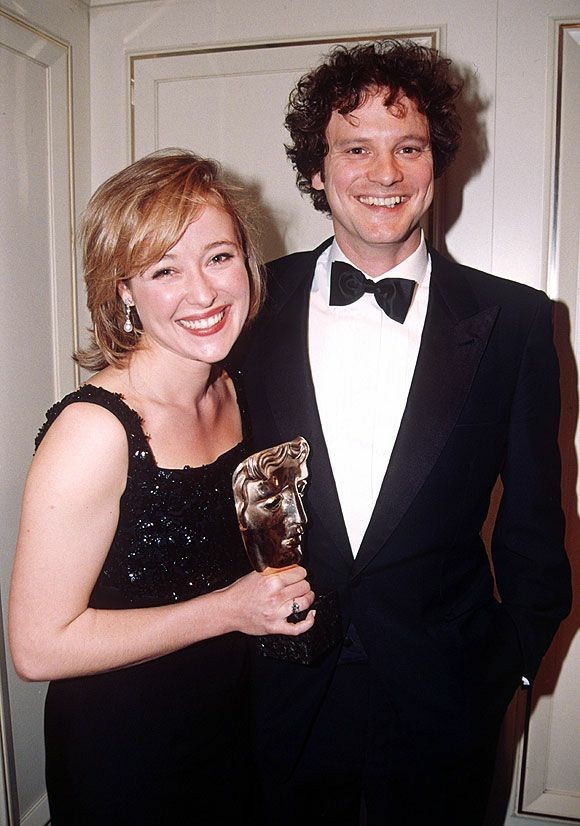
At 26, Jennifer Ehle came to fame embodying the iconic Elizabeth Bennet in the 1995 BBC miniseries Pride and Prejudice, for which she won a BAFTA TV Award.https://youtu.be/q-qKUn0SOw8?si=0Ik81dZEVnThej2J








@gretchen9088
2 months agoJennifer Ehle on the Rosie O'Donnell Show
Jennifer Anne Ehle (/?i?li/; born December 29, 1969)[3] is an American and British actress. The daughter of writer John Ehle and English actress Rosemary Harris, Ehle started her career acting on stage in the United Kingdom, with the Edinburgh Festival, the Royal Shakespeare Company, and the National Theatre. She earned a Tony Award for Best Actress in a Play and a nomination for the Laurence Olivier Award for Best Actress in Tom Stoppard's The Real Thing. She reunited with Stoppard acting in his play The Coast of Utopia (2007), earning a Tony Award for Best Featured Actress in a Play. She appeared on Broadway in the J.T. Rogers play Oslo, earning a second Tony nomination for Best Actress.
Ehle is also known for her film performances, including The King's Speech (2010), Contagion (2011), Zero Dark Thirty (2012), A Little Chaos (2014), Fifty Shades of Grey (2015), Little Men (2016), Fifty Shades Darker (2017), Fifty Shades Freed (2018), Saint Maud (2019) and She Said (2022). She has also appeared in various television programs, including NBC's The Blacklist (2014–2015), the Hulu limited series The Looming Tower (2016), the Showtime miniseries The Comey Rule (2020), and the CBS legal drama The Good Fight (2022). She received the British Academy Television Award for Best Actress for her role as Elizabeth Bennet in the BBC miniseries Pride and Prejudice (1995). She starred in the 2023 Amazon Prime miniseries Dead Ringers.[4]
Early life and education
Ehle was born in Winston-Salem, North Carolina, to English actress Rosemary Harris and American author John Ehle. Her ancestry includes Romanian (from a maternal great-grandmother) and, paternally, German and English.[5][6]
Ehle appeared as a toddler in a 1973 Broadway revival of A Streetcar Named Desire, in which her mother played Blanche DuBois.[7] She spent her childhood in the UK and the US, attending several schools, including Interlochen Arts Academy. She was mainly raised in Asheville, North Carolina. Her drama training was split between the North Carolina School of the Arts[8] and the Central School of Speech and Drama in London.[9]
Career