风萧萧_Frank
以文会友

重塑战前争议标签
https://apjjf.org/2024/4/hanssen
作者:ULV HANSSEN 2024年4月30日
中国的“假想敌”:日本重塑战前争议标签
摘要:近日有消息披露,日本自卫队已将中国列为“假想敌”。这一说法由来已久,其历史可追溯至战前军国主义时期。上世纪30年代,日本军方曾将美国列为假想敌。二战后,这一认定被认为是军国主义者认为战争不可避免的原因之一。因此,禁止将其他国家称为假想敌的禁忌逐渐形成。但随着战争记忆的淡化,这一禁忌也随之消退。日本防卫机构如今将中国贴上“假想敌”的标签,这对中日关系而言并非好兆头。
关键词:日本,中国,假想敌,禁忌,冷战
引言
2月初,日本媒体报道称,日本自卫队和美军在“锐利之刃”(Keen Edge)联合军事演习中将中国列为假想敌(《西日本新闻》2024)。该报道并未引起太多关注,但如果发生在冷战时期,势必会引发轩然大波,甚至可能导致防卫机构高层辞职。正如我们将看到的,这种情况在20世纪60年代确实发生过。二战战败后,将其他国家贴上“假想敌”的标签在日本成为了一种强烈的禁忌。这是因为这种做法与战前公开将美国视为假想敌的军国主义者密切相关。人们普遍认为,“假想敌”这一标签在军国主义者中造成了一种与该敌人开战不可避免的错觉。因此,在战后时期,这一标签被视为危险之物,是重塑后的日本“和平国家”应当避免使用的。政府官员竭力强调,战后日本不将任何其他国家视为其假想敌。然而,自卫队再次使用这一战前备受争议的标签来描述中国,表明“假想敌”禁忌的威慑力正在减弱,日本国防规划者对中国的威胁认知也在不断增强。这一事态发展对中日关系而言并非好兆头。
接下来,我们将探讨“假想敌”(日语为“kasō tekikoku”)一词在战前时期的使用情况,以及它在战后时期如何演变为禁忌词汇。以下许多引文和案例均出自我的著作《战后日本的临时身份与安全政策》(2020年出版)的第三章和第五章,我在书中追溯了“假想敌”这一概念的历史。
必然性的神话
假想敌指的是那些国家利益与自身利益严重冲突,以至于在不久的将来极有可能发生军事冲突的国家。日本第一份将其他国家列为假想敌的官方文件是1907年的日本首份国防计划(Samuels 2007: 16)。在这份文件中,美国、俄罗斯、德国和法国被列为假想敌。20世纪初,日本海军认为美国是最大的威胁,而陆军则更关注俄罗斯。但到了20世纪30年代,军方内部逐渐形成共识,认为美国才是最大的假想敌。这主要是由于美国反对日本在中国的领土野心。
将他国明确贴上“假想敌”的标签,其潜在风险之一在于,与该国发生军事冲突的可能性可能会逐渐变得不可避免。心理学领域早已认识到这种动态。和平心理学家拉尔夫·K·怀特(Ralph K. White,1968:267)研究了人类认知与战争之间的联系,他认为,塑造“邪恶的敌人形象”可能是“导致不必要战争的最危险的认知”。战前日本的情况似乎正是如此,当时日本的每一项军事决策都是为了应对许多人认为不可避免的与美国的战争。当然,我们无法衡量“假想敌”标签在多大程度上导致了人们对战争不可避免的信念,但毫无疑问的是,在整个20世纪30年代,日本领导层开始以日益宿命论的视角看待世界(Miwa,1975)。最明显的例子莫过于首相东条英机在1941年非理性地号召对美开战,尽管他可能明知这场战争毫无胜算。东条英机曾发表过一句名言,称有时必须“闭着眼睛从清水寺的阳台上跳下去”(Samuels 2007: 1)。
这种天命论并非日本军国主义集团的专属,它也广泛存在于被战争煽动起来的民众之中。
民族主义狂热。20世纪初一些风靡一时的战争恐慌书籍的书名,便可让我们窥见战争不可避免的信念有多么根深蒂固:《日本与美国之间不可避免的战争》(1911年);《下一场战争》(1913年);《日本与美国即将开战的叙事》(1920年)(佐伯,1975年)。
这些狂热的情绪最终将日本拖入了一场毫无胜算的战争。1941年12月珍珠港事件后,美国从一个假想的敌人变成了一个活生生的敌人。战争的结果对日本来说是灾难性的,数百万日本人丧生,国家遭受了破坏、战败和外国占领。
战后日本的假想敌人禁忌
战后,日本几乎达成共识,认为必须不惜一切代价避免军国主义。战争的责任完全归咎于军国主义者及其政治和官僚帮凶。在1945年至1952年美国占领期间,近千人被处决,约20万人被清除出公职(Hayes 2013: 34)。日本民众普遍认为,战后日本必须与过去彻底决裂。如果说战前日本的特征是军国主义,那么战后日本的特征就必须与之相反——和平主义。可以说,战后日本出现的和平主义民族认同建立在对军国主义历史的否定之上(Hanssen 2020)。美国占领当局也促成了这种认同的构建,他们强加给日本一部和平宪法,并解散了日本军队。这排除了战后出现更具尚武精神的认同的可能性。然而,必须指出的是,无论从身份认同还是军事能力层面来看,日本的绥靖程度都远未达到最坚定的和平主义者所期望的程度。这主要是由于美国占领政策的转变,导致数千名被清洗者得以平反,并建立了一支规模有限的日本军队。这造成了过去与现在之间令人不安的延续性,但反军国主义的身份认同仍然在战后日本扎根(Berger 1993)。
为了防止灾难性战争的重演,军国主义者受到了严密的审查。这自然也促使人们审视驱动其政治议程的实践和信仰。天皇崇拜和国家神道教显然是必须根除的意识形态基础,以防止历史重演。最终,军国主义者将其他国家视为假想敌的做法也被认为是一种危险的做法。据说这种做法很危险,因为它导致军国主义者执迷不悟、宿命论地准备一场许多人认为本可以避免的战争。正如共产党党员岩间正雄在1951年国会发言时所说:
“如果你审视日本过去侵略战争的性质,尤其是其帝国主义侵略战争,你会发现(军方)总是会制造假想的敌人。他们声称敌人会入侵我们,并以此为前提,告诉我们必须进行各种形式的武装。日本帝国主义通过超出我们实际能力的备战以及入侵他国,给我们带来了今天的毁灭。”(岩间,1951)
通过诸如此类的论述,“假想的敌人”这一标签与战前狂热紧密相连,并在战后成为禁忌。
在20世纪50年代激烈的安全政策辩论中,以社会党为首的左翼反对党经常指责政府暗中设立假想敌。这是一种将政府与战前军国主义者联系起来,从而削弱其合法性的手段。这一策略在1960年关于续签美日安保条约的激烈辩论中达到了顶峰。左翼政党猛烈抨击该条约将共产主义国家视为假想敌(例如,田中1960年)。由于执政的自民党由岸信介领导,而岸信介曾因参与东条英机内阁而被美国占领当局以甲级战犯的罪名逮捕(后被释放),这使得将自民党描绘成战前军国主义延续的企图更加容易得逞。
岸本齐史政府强烈否认了“敌我假设”的指控,认为这种咄咄逼人的做法在现代社会已经过时。岸本坚持认为,政府通过新的安全条约寻求的是普遍威慑,而非针对任何特定敌人。他的政府试图将威慑塑造成一种现代且更为温和的安全政策。他在1960年国会辩论中的许多发言都表明,岸本齐史极力想要与过去的军事做法划清界限:
“我们不是……”
不再以假想敌的视角思考问题。过去,在战前时期,假想敌被用作扩充陆军和海军的理由。[…] 但现在,我们在加强日本自卫能力时,不再以这种视角思考问题了”(岸本齐史,1960)。
日本防卫厅厅长赤木宗则赞同岸本齐史的观点,并强调了过去那种咄咄逼人的指定假想敌的做法与所谓非侵略性的新型威慑做法之间的区别。
“过去的确存在一种军事竞争,在这种竞争中,假想敌被单独挑出来,各方试图找到消灭敌人的方法。但近年来,[…] 我认为军备建设已经转向威慑。”因此,这不再是假想敌的问题,而是相互威慑避免战争的问题”(赤木,1960)。
这种将恶意且过时的敌人假设与良性且现代的威慑区分开来的做法,成为日本政府在整个冷战期间反复强调的论点。上述论述表明,到1960年,将其他国家指定为假想敌已成为一种禁忌。这会唤起人们对一段不愿与之关联的历史的记忆。
20世纪60年代还出现了其他一些例子,说明假想敌禁忌的根深蒂固。1965年,社会党国会议员冈田春雄披露了一份秘密的自卫队应急计划,该计划将朝鲜和中国列为具体的假想敌。这项被称为“三箭计划”的计划,因宣扬“过去的战时思维”而受到日本媒体的批评(朝日新闻,1965)。首相佐藤荣作(1965年)对此计划毫不知情,他谴责该计划“绝对不可接受”。日本防卫大臣小泉纯也(1965年)在国会道歉,称使用“假想敌”一词“不妥”。他随后被迫辞职。
仅仅三年后,冈田再次令防卫机构难堪。这一次,他披露了自卫队近期举行的两次演习——“菊”和“隼”——的信息,在这些演习中,苏联被指定为假想敌。在国会,冈田就假想敌问题质询了新任日本防卫大臣增田兼七。增田兼七(1968年)像他的前任一样,不得不道歉并承诺“今后不会再举行指定假想敌的演习”。
这些事件表明,在冷战时期,假想敌禁忌的根深蒂固。它们也表明,在这样的环境下,国防计划的制定是多么困难。其职责是保护日本免受外部威胁,但却不允许推测这些威胁可能来自哪里。正如日本防卫省总干事大村让治在1981年国会上所说:“我们的国家政策是基于宪法理念的和平外交。”从这个意义上讲,我们不能将任何国家视为敌人,视为假想的敌人”(大村,1981)。
假想敌人禁忌至少对日本安全政策产生了一个显著影响:日本国防预算的自我限制。1976年,日本政府通过内阁决议,将国防开支限制在GDP的1%。正如现实主义者所指出的,从安全角度来看,这一决定毫无意义,因为国防开支完全脱离了安全环境分析,并与看似无关的经济增长指标挂钩。从客观的军事角度来看,这种自我限制确实显得不理性。但将国防开支与过去二十年来一直表现优异的经济表现挂钩,是确保国防资金来源的一种方式,而无需将其他国家指定为威胁或敌人。这项政策的出台,源于日本国内外日益增长的担忧,即日本不断增长的经济实力会再次转化为军事实力。1%的上限旨在……消除这些疑虑并表明日本并无此类意图,因为与战前日本不同,战后日本并不将任何人视为敌人。
假想敌禁忌的削弱
在20世纪80年代冷战紧张局势再度升温之际,假想敌禁忌显然开始减弱。随着对苏联威胁的认知不断增强,一批深受现实主义传统影响的新型国防专家开始在日本涌现。他们强烈呼吁取消“不合理”的1%国防开支上限,并更加清醒地认识到苏联对日本安全的直接威胁(例如,佐藤,1985)。这些新现实主义者的最佳代表或许是退役自卫队将军栗栖宏臣。1980年,栗栖宏臣出版了一本名为《苏联假想敌》的书,书名颇具挑衅性。他在书中抱怨说,日本的国防规划受到了苏联的掣肘。
“不应将苏联视为假想敌”——他认为这种观点不切实际,且对日本安全构成威胁(Kurisu 1980: 156)。
20世纪80年代日本最重要的首相中曾根康弘也受到现实主义思潮的影响,呼吁日本安全政策“正常化”,他认为当时的政策过于理想化。他将推翻1%的国防开支上限,并根据威胁环境分析而非经济增长来确定国防开支作为自己的个人目标之一。1987年,他确实突破了1%的上限,但那一年国防开支仅占GDP的1.004%(Hook 1988: 389)。
中曾根政府也开始将苏联描述为威胁。它并不打算恢复战前备受争议的“假想敌”一词,但却公开将苏联称为“潜在威胁”(日语为“senzaiteki kyōi”)。在整个20世纪80年代,日本的国防白皮书都持续使用这一短语来描述苏联(Hook 1988: 383)。中曾根在试图区分可接受的“潜在威胁”和不可接受的“假想敌”这两个词时,运用了语言上的技巧。他认为,“假想敌”指的是一个既拥有强大的军事能力又具有侵略意图的国家,而“潜在威胁”仅仅意味着一个拥有强大的军事能力的国家。他认为,这意味着苏联并非假想敌:
“我们不把苏联视为假想敌。只有在侵略意图和侵略能力兼备的情况下,我们才能称之为假想敌。从这个角度来看,苏联目前并非假想敌”(中曾根,1983)。
毋庸置疑,这两个术语之间的区别存在问题,因为如果将潜在威胁与意图脱钩,仅仅指拥有强大军事能力的国家,那么即使是美国也符合这一描述。显然,中曾根政府试图找到一种既能谈论苏联威胁,又不被指责将其定义为假想敌的方法。即使是相对强硬的中曾根政府也如此在意此类指责,这证明在20世纪80年代,“假想敌”的禁忌从未完全消失。但对苏联更为敌对的立场表明,这种禁忌已被削弱。
“假想敌”标签的回归
冷战结束后,围绕“假想敌”标签的禁忌进一步减弱。这或许是自然现象,因为人们对战前和战时的集体记忆正在逐渐淡去。如今的日本似乎并没有对“假想敌”标签抱有强烈的抵触情绪。对大多数人来说,这个标签或许显得陌生而怪异,但可能并不令人反感或危险。但这并不意味着日本政府很快就会在官方文件中使用这个词。毕竟,在“锐利之刃”演习中,中国被单独提及,而当时使用这个词原本是秘密进行的。我们之所以知道这件事,仅仅是因为媒体泄露了相关信息。从这个角度来看,最近的泄露与上世纪60年代的“三箭研究”以及“菊”和“隼”式演习有相似之处。但公众和媒体的反应却截然不同。上世纪60年代,日本秘密使用“假想敌”这一概念的曝光引发了公众的强烈愤慨,官方被迫道歉,甚至导致防卫大臣辞职。而到了2024年,公众的反应却温和得多,媒体对此事的报道也在几天后销声匿迹。在国会,没有一位反对派议员就自卫队使用该词质询防卫大臣,更遑论敦促他辞职。
然而,如今自卫队在军事演习中将中国视为“假想敌”的消息已被曝光,我们有必要回顾一下,为何这个概念最初会成为禁忌。
首先,这个概念之所以成为禁忌,是因为它与战前备受憎恶的军国主义军事理论紧密相连。即便抛开其他因素,如今“假想敌”概念的重新启用,也再次提醒我们,二战的记忆正在逐渐消退,对日本安全政策的约束力正在减弱。其次,贴上“敌人”标签之所以成为禁忌,是因为当时普遍认为,将假想敌单独挑出来会造成一种战争不可避免的心理预期。我并非意在断言使用“敌人”标签与发动战争的决定之间存在直接因果关系。当然,诸多物质因素,例如力量平衡和美国严厉的制裁,在日本1941年做出那项影响深远的决定中发挥了重要作用。另一方面,我也不想完全否定冷战时期日本普遍认为的“假想敌”标签可能带来的危险后果。这是因为,与威胁或挑战不同,人们可以
与敌人共存并非必然。人们很容易认为必须消灭敌人,否则敌人就会消灭自己。因此,指定敌人,即使是假想的敌人,也可能造成对未来冲突的预期,从而阻碍和平解决冲突的方式。
为了防止日本滋生确定性的战争预期,自卫队应避免在演习中指定特定国家为假想敌人。有人可能会认为,这对自卫队来说是一个不合理的要求,会削弱其应对突发事件的准备。但除了极度敌对的国家关系之外,避免指定敌人是军事演习中的常见做法。正如詹姆斯·谢汉(James Sheahan,2018:106)所指出的,为了减少误解,“演习中会使用化名指代参与者”,因为这“可以避免暗示对手是任何现实中的国家”。在日本的双边关系中,中国的重要性仅次于美国。因此,东京应尽一切努力与北京保持积极关系。将中国贴上假想敌人的标签会不必要地加剧相互不信任,并可能以危险的方式影响日本对中国的看法。假想的敌人标签应该被埋在历史的垃圾箱里。
参考
赤城、宗德。 赤城宗德。 1960 年。日本国会,上议院,预算委员会。 3 月 12 日。 https://kokkai.ndl.go.jp/txt/103415261X01319600311/57
朝日新闻. 朝日新闻. 1965.《仮想敌国が问题简単でない责任论》关于责任的艰难辩论]”。 2月11日:2.
Berger, Thomas U. 1993. ‘从刀剑到菊花:日本的反军国主??义文化’。《国际安全》17(4): 119-150。
Hanssen, Ulv. 2020. 《战后日本的时间身份与安全政策》。伦敦和纽约:Routledge出版社。
Hayes, Louis D. 2013. 《日本政治导论》。第五版。纽约:Routledge出版社。
Hook, Glenn D. 1988. ‘当代日本反军国主义原则的瓦解’。《和平研究杂志》25(4): 381-394。
Iritani, Toshio. 1991. 《战时日本人的群体心理学》。伦敦和纽约:Kegan Paul International出版社。
Iwama, Masao. 岩間正男。 1951 年。日本国会,上议院,预算委员会。 3 月 22 日。 https://kokkai.ndl.go.jp/txt/101015261X01419510222/72
岸信介。 岸信介。 1960 年。日本国会,上议院,预算委员会。 3 月 29 日。 https://kokkai.ndl.go.jp/txt/103415261X02119600329/220
小泉纯也。 小泉纯也。 1965 年。日本国会下议院预算委员会。 https://kokkai.ndl.go.jp/txt/104815261X01319650316/218
红莉栖、广臣。 栗栖弘臣。 1980.仮想敌国ソ连:我らこう迎え撃つ [苏联假想敌:这就是我们面对他们的方式]。东京:讲谈社。
增田、金七。 増田甲子七。 1968 年。日本国会下议院预算委员会。 https://kokkai.ndl.go.jp/txt/105805261X01719680316/348
美轮、君忠。 “日本与美国战争的形象”。载《相互图像:美日关系论文集》,入野彰主编,115-37。剑桥和伦敦:哈佛大学出版社。
中曾根、康弘。 中曾根康弘。 1983 年。日本国会上议院全体会议。 1 月 28 日。 https://kokkai.ndl.go.jp/txt/109815254X00319830128/3
西日本新闻. 西日本新闻. 2024年,《日米、仮想敌国に「中国」明示强い危机感、台湾有事想定し初演【日美将中国列为假想敌:台湾首次在强烈威胁感知下举行应急演习】。 2 月 5 日。 https://www.nishinippon.co.jp/item/o/1175577/
大村,丈二。 大村襄治。日本国会、上议院、预算委员会。 3 月 11 日。 https://kokkai.ndl.go.jp/txt/109415261X00619810311/297
Samuels, Richard J. 2007。确保日本安全:东京的大战略和东亚的未来。伊萨卡和伦敦:康奈尔大学出版社。
佐伯、庄一。 1975。“美国作为假想敌人的形象”。载《相互图像:美日关系论文集》,入野彰主编,100-14。剑桥和伦敦:哈佛大学出版社。
佐藤荣作. 佐藤栄作。 1965 年。日本国会下议院预算委员会。 2 月 10 日。 https://kokkai.ndl.go.jp/txt/104805261X01019650210/127
佐藤金光. 1985. “国防开支1%的非理性上限”。《日本回声》12(2): 22-26。
詹姆斯·希恩. 2018. “20世纪70年代和80年代的北约指挥所演习”。载于《军事演习:政治信息传递与战略影响》,贝娅特丽丝·豪瑟、托尔莫德·海耶和纪尧姆·拉斯孔加里亚斯编,93-112页。罗马:DeBooks出版社。
田中织之进. 1960. 日本国会众议院预算委员会。3月1日。 https://kokkai.ndl.go.jp/txt/103405261X01719600301/8
怀特,拉尔夫·K. 1968。《无人想要战争:越南战争及其他战争中的误解》。纽约:双日出版社。
2022年,岸田文雄政府决定在未来五年内将日本国防预算翻一番,达到GDP的2%。这是自1976年以来,日本国防预算占GDP 1%政策以来的首次重大调整。
Rehabilitates A Problematic Prewar Label
https://apjjf.org/2024/4/hanssen
BY: ULV HANSSEN April 30, 2024
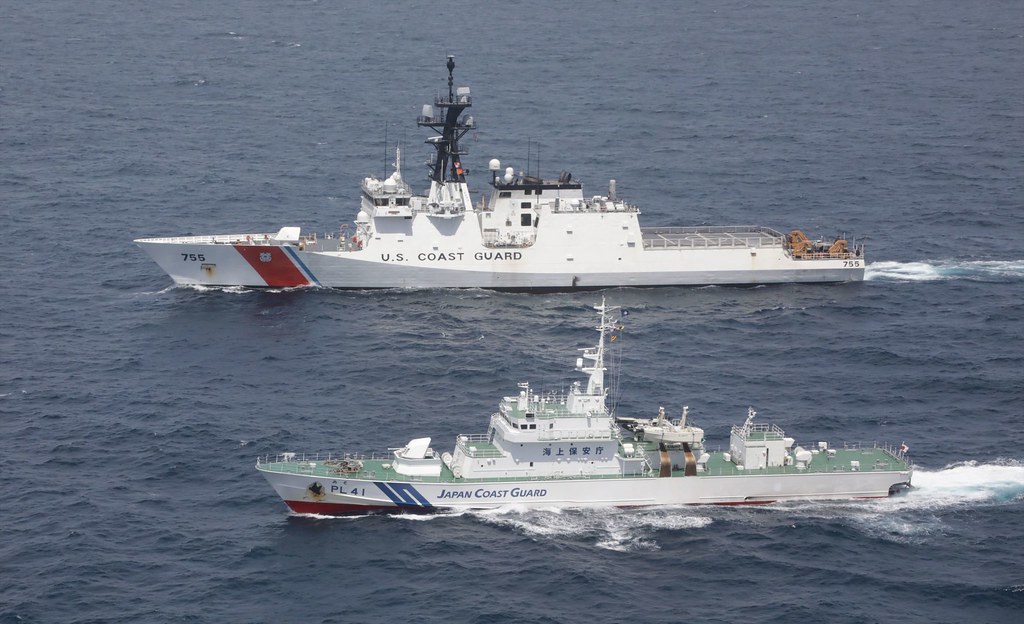
Abstract: It was recently revealed that Japan’s Self-Defense Forces now designate China as a “hypothetical enemy”. This phrase has a controversial history that stretches back to the era of prewar militarism. In the 1930s, the Japanese military designated the US as a hypothetical enemy. After World War 2, this designation was identified as a reason for the militarists’ view of war as inevitable. A strong taboo against labeling other countries as hypothetical enemies therefore emerged. But as the collective memory of war has waned, so has the hypothetical enemy taboo. The fact that the label is now attached to China by Japan’s defense establishment does not bode well for Sino-Japanese relations.
Keywords: Japan, China, Hypothetical Enemy, Taboo, Cold War
Introduction
In early February, Japanese media reported that the Japanese Self-Defense Forces (SDF) and the US Forces had designated China as a hypothetical enemy during the military exercise Keen Edge (Nishi Nippon Shimbun 2024). The story garnered little attention, but if it had happened during the Cold War, it would have caused a major scandal, possibly leading to high-level resignations in the defense establishment. As we will see, this did, in fact, happen in the 1960s. After the defeat in World War 2, the practice of labeling other countries as hypothetical enemies became a powerful taboo in Japan. That was because this practice was closely associated with the prewar militarists who had openly viewed the US as the hypothetical enemy. It was commonly believed that the hypothetical enemy label had created a feeling among the militarists that war with this enemy was inevitable. In the postwar period, the label was therefore seen as dangerous and something that the reinvented Japanese “peace state” should avoid. Government officials went out of their way to stress that postwar Japan did not see any other state as its hypothetical enemy. The fact that the SDF is again using this controversial prewar label to describe China demonstrates the weakening of the hypothetical enemy taboo and the growing threat perceptions vis-à-vis China in the minds of Japanese defense planners. This development does not bode well for Sino-Japanese relations.
In the following, we will examine how the term “hypothetical enemy”, or “kasō tekikoku” in Japanese, was used in the prewar period and how it turned into a taboo phrase in the postwar period. Many of the following quotes and episodes come from chapters 3 and 5 of my 2020 book, Temporal Identities and Security Policy in Postwar Japan, where I trace the history of the term.
The Myth of Inevitability
A hypothetical enemy refers to a country whose national interests are so incompatible with your own that military conflict with that country is deemed probable in the relatively near future. The first Japanese official document that designated other countries as hypothetical enemies was Japan’s first national defense plan of 1907 (Samuels 2007: 16). In this document, the US, Russia, Germany and France were given the label. In the beginning of the 20th century, the Japanese navy saw the US as the greatest threat whereas the army was more concerned about Russia, but in the 1930s, a consensus emerged within the military establishment that the US was by far the greatest hypothetical enemy. This was mainly due to American opposition to Japan’s territorial ambitions in China.
One potential risk with explicitly labeling another country as a hypothetical enemy is that the prospect of military conflict with that country could begin to take on an air of inevitability. This dynamic has been recognized in the field of psychology for a long time. Peace psychologist Ralph K. White (1968: 267) who studied the link between human perceptions and war, argued that the creation of a “diabolical enemy image” was “probably the most dangerous [perception] as a cause of unnecessary war”. That seems to have been the case in prewar Japan where every military decision was made in preparation for what many felt was an inevitable war with the US. It is of course impossible to measure the extent to which the hypothetical enemy label caused a belief in war as inevitable, but it is unquestionable that the Japanese leadership began to see the world in increasingly fatalistic terms throughout the 1930s (Miwa 1975). The clearest example of this is Prime Minister Tōjō Hideki’s irrational call for a war against the US in 1941 despite probably knowing that such a war was unwinnable. Tōjō famously declared that sometimes it was necessary to “jump with one’s eyes closed from the veranda of the Kiyomizu Temple” (Samuels 2007: 1).
This sentiment of destiny was not limited to the militarist clique that ruled Japan. It was also widespread among a public that was riled up with nationalist fervor. A look at the titles of some of the tremendously popular war-scare books in the early 20th century gives us an indication of how deep the inevitability belief ran: The Inevitable War between Japan and the United States (1911); The Next War (1913); Narrative of the Coming War between Japan and the United States (1920) (Saeki 1975).
These fanatical emotions ultimately hurled Japan into a war it had no chance of winning. With the Pearl Harbor attack in December 1941 the US transformed from a hypothetical enemy to a very real one. The war result was disastrous for Japan as millions of Japanese died and the country had to endure destruction, defeat, and foreign occupation.
The Hypothetical Enemy Taboo in Postwar Japan
After the war there was a near consensus in Japan that militarism had to be avoided at all costs. Responsibility for the war was placed squarely at the feet of the militarists and their political and bureaucratic enablers. Nearly a thousand of them were executed and about 200,000 were purged from public office during the American occupation from 1945 to 1952 (Hayes 2013: 34). There was broad agreement in the Japanese population that postwar Japan had to make a clean break with the past. If prewar Japan had been characterized by militarism, postwar Japan had to be characterized by the opposite, pacifism. One could say that the pacifist national identity that emerged in postwar Japan was founded on a negation of the militarist past (Hanssen 2020). This form of identity construction was also facilitated by the US occupation authorities which imposed a pacifist constitution on Japan and disbanded its military. This foreclosed the possibility of a more martial form of postwar identity. It should be said, however, that the pacification of Japan, both in terms of identity and military capability, never went as far as the most ardent pacifists would have liked. This was primarily due to a shift in US occupation policy that saw the rehabilitation of thousands of purged individuals and the establishment of a limited Japanese military. This created uncomfortable continuities between past and present, but an anti-militarist identity nonetheless managed to take root in postwar Japan (Berger 1993).
To prevent a repeat of the disastrous war, the militarists were scrutinized intensely. This naturally also led to an examination of the practices and beliefs that had driven their agenda. Emperor worship and state Shinto were obvious ideological underpinnings that had to be eradicated to prevent a repetition of the past. Eventually the militarists’ designation of other countries as hypothetical enemies was also identified as a dangerous practice. It was said to be dangerous because it had led the militarists to obsessively and fatalistically prepare for a war that many felt could have been avoided. As Communist Party member Iwama Masao stated in the Diet in 1951:
“If you look at the nature of Japan’s past offensive war, its imperialist offensive war, you will see that [the military], without fail, would create hypothetical enemies. They would claim that the enemy would invade us and, based on that premise, we were told that we would have to undertake various forms of armament. By strengthening our preparedness beyond our actual capacity and by invading other countries, Japanese imperialism brought today’s destruction on us” (Iwama 1951).
Through articulations like these, the hypothetical enemy label was closely linked to prewar fanaticism and became a taboo in the postwar period.
In the fierce security policy debates of the 1950s, the opposition parties on the Left, led by the Socialist Party, frequently accused the government of secretly having hypothetical enemies. This was a way of linking the government to the prewar militarists and thereby delegitimizing it. This strategy would come to a head during the tumultuous debates on the renewal of the security treaty with the US in 1960. The leftwing parties fiercely attacked the security treaty for treating the communist countries as hypothetical enemies (e.g. Tanaka 1960). The attempt at portraying the ruling Liberal Democratic Party as a continuation of prewar militarism was facilitated by the fact that it was led by Kishi Nobusuke, a man who had been arrested (and later released) by the American occupation authorities as a class A war criminal for his participation in the Tōjō War Cabinet.
The Kishi Government vehemently denied the charge of enemy hypothesizing, arguing that such an aggressive practice was obsolete in the modern age. Instead, what the government was seeking with the new security treaty, Kishi insisted, was general deterrence without any specific enemy in mind. His government tried to frame deterrence as a modern and far more benign form of security policy. Many of his statements during the 1960 Diet debates reveal how important it was for Kishi to try to dissociate himself from the military practices of the past:
“We are not thinking in terms of hypothetical enemies. In the past, in the prewar period, hypothetical enemies were given as the reason for the expansion of the army and the navy. […] But now we are not thinking in such terms when we are strengthening Japan’s self-defense capabilities” (Kishi 1960).
The Director-General of Japan’s Defense Agency (JDA), Akagi Munenori, echoed Kishi’s sentiment and stressed the difference between the aggressive, old practice of designating hypothetical enemies and the allegedly non-aggressive, new practice of deterrence.
“It is a fact that in the past there was military competition in which hypothetical enemies were singled out and one tried to find ways to destroy one’s enemies. But recently […] I think armaments have shifted towards deterrence. Accordingly, it is no longer a matter of hypothetical enemies, but a matter of deterring each other from going to war” (Akagi 1960).
This distinction between malign and obsolete enemy hypothesizing and benign and modern deterrence became a recurring argument by the Japanese government throughout the Cold War. What the statements above show is that, by 1960, designating other countries as hypothetical enemies had become a taboo. It evoked memories of a past that no one wanted to be associated with.
The 1960s would offer a couple of other examples of how strong the hypothetical enemy taboo had become. In 1965, Socialist Diet member Okada Haruo revealed a secret SDF contingency plan that singled out North Korea and China as specific hypothetical enemies. The plan, known as the Three Arrows Study, was criticized in the Japanese media for espousing “the wartime thinking of the past” (Asahi Shimbun 1965). Prime Minister Satō Eisaku (1965), who was unaware of the plan, condemned it as “absolutely unacceptable”. JDA Director-General Koizumi Junya (1965) apologized in the Diet, stating that it had been “inappropriate to use the words ‘hypothetical enemies’”. He was later forced to resign.
Only three years later, Okada would again embarrass the defense establishment. This time he disclosed information about a couple of recent SDF exercises, Kiku and Hayabusa, where the Soviet Union had been designated as the hypothetical enemy. In the Diet, Okada grilled the new JDA Director-General Masuda Kaneshichi on the issue of hypothetical enemies. Masuda (1968), like his predecessor, had to apologize and promise that “from now on we will not conduct exercises that designate hypothetical enemies”.
These episodes demonstrate how strong the hypothetical enemy taboo was during the Cold War. They also demonstrate how difficult defense planning was under these conditions. The SDF was tasked with protecting Japan from external threats, but it was not allowed to hypothesize about where these threats might come from. As JDA Director-General ?mura Jōji stated in the Diet in 1981, “Our national policy is peace diplomacy based on the philosophy of our constitution. In that sense, we are not permitted to regard any country as an enemy, as a hypothetical enemy” (?mura 1981).
The hypothetical enemy taboo had at least one significant effect on Japanese security policy: the self-imposed limitation on Japan’s defense budget. In 1976, the Japanese government made a cabinet decision to limit defense spending to one percent of GDP. As realists like to point out, this decision made no sense from a security perspective because defense spending became completely detached from analyses of the security environment and got pegged to the seemingly irrelevant metric of economic growth. From an objectively military perspective, this kind of self-limitation does indeed seem irrational. But linking defense spending to economic performance, which had been splendid for two decades, was one way of securing defense funding without having to designate other countries as threats or enemies. The policy was conceived in the context of growing concern inside and outside Japan that the country’s growing economic power would once again be transformed into military power. The one-percent ceiling was meant to alleviate these concerns and demonstrate that Japan had no such intentions because, unlike prewar Japan, postwar Japan did not regard anyone as its enemy.
The Weakening of the Hypothetical Enemy Taboo
During the rekindled Cold War tensions of the 1980s, the hypothetical enemy taboo clearly began to weaken. As threat perceptions vis-à-vis the Soviet Union increased, a new brand of defense experts, steeped in the realist tradition, began to emerge in Japan. They loudly called for the elimination of the “irrational” one-percent ceiling on defense spending and a more sober view of the Soviet Union as a direct threat to Japan’s security (e.g. Satō 1985). The best example of these new realists was perhaps Kurisu Hiroomi, a retired SDF general. In 1980, Kurisu wrote a book with the provocative title, The Soviet Hypothetical Enemy. In it he complained that Japanese defense planning was hamstrung by the idea that “the Soviet Union must not be seen as a hypothetical enemy”—an idea he regarded as unrealistic and dangerous for Japanese security (Kurisu 1980: 156).
The clearly most significant Japanese prime minister of the 1980s, Nakasone Yasuhiro, was also inspired by the realist trend and called for a “normalization” of Japan’s security policy, which he viewed as far too idealistic. He made it one of his personal goals to overturn the one-percent ceiling and base defense spending on analyses of the threat environment rather than on economic growth. He did manage to eclipse the one-percent mark in 1987, but only symbolically as defense spending constituted 1.004 percent of GDP that year (Hook 1988: 389).1
The Nakasone administration also began to describe the Soviet Union as a threat. It was not prepared to rehabilitate the controversial prewar signifier “hypothetical enemy”, but it did openly label the Soviet Union as a “potential threat” (“senzaiteki kyōi” in Japanese). This phrase was consistently used to describe the Soviet Union in the Japanese defense white papers throughout the 1980s (Hook 1988: 383). Nakasone resorted to linguistic acrobatics when trying to distinguish the acceptable term “potential threat” from the unacceptable term “hypothetical enemy”. He argued that a hypothetical enemy signified a country with both strong military capabilities and aggressive intent, whereas a potential threat only signified strong military capabilities. This, he argued, meant that the Soviet Union was not a hypothetical enemy:
“We do not regard the Soviet Union as a hypothetical enemy. We can speak of a hypothetical enemy in cases where there is a combination of aggressive intent and capability. From that perspective, the Soviet Union is not at present a hypothetical enemy” (Nakasone 1983).
Needless to say, the distinction between the two terms was problematic because if a potential threat was decoupled from intentions and simply meant a country with powerful military capabilities, even the US would fit that description. It was clear that the Nakasone government tried to find a way to talk about the Soviet threat without being accused of designating it as a hypothetical enemy. That even the relatively hawkish Nakasone government was so concerned about such accusations is proof that the hypothetical enemy taboo never fully disappeared during the 1980s. But the more hostile stance toward the Soviet Union indicates that it was weakened.
The Return of the Hypothetical Enemy Label
After the end of the Cold War, the taboo surrounding the hypothetical enemy label has been further weakened. This is perhaps natural as the collective memory of the prewar and wartime eras wanes. There does not appear to be any strong aversion against the hypothetical enemy label in today’s Japan. For most people, the label might appear unfamiliar and strange, but probably not repugnant or dangerous. But that does not mean that the Japanese government will start using the term in official documents anytime soon. After all, the usage of the term in the Keen Edge exercise, where China was singled out, was meant to be secret. We only know about it because of leaks to the media. In that regard, the recent revelation is similar to the Three Arrows Study and the Kiku and Hayabusa exercises in the 1960s. But a big difference can be seen in the public and media reaction. In the 1960s, revelations of secret usage of the hypothetical enemy label led to outrage, official apologies and even a resignation by the defense chief. In 2024, the public reaction was much milder and the media coverage of the story dissipated after a few days. In the Diet, not a single opposition politician questioned the defense minister about the SDF’s use of the term, much less urged him to resign.
But now that it has been revealed that the SDF is regarding China as a hypothetical enemy in its military drills, it is worth recalling why a taboo developed around this label to begin with.
Firstly, the label became a taboo because it was closely associated with the military doctrine of the detested prewar militarists. If nothing else, the rehabilitation of the hypothetical enemy label today is yet another reminder of how the memories of World War 2 are weakening and losing their restraining power over Japanese security policy. Secondly, the label became a taboo because there was a widespread belief that singling out hypothetical enemies had created a psychological expectation of war as inevitable. It is not my intention to claim any direct causality between the use of a label and the decision to go to war. Surely, many material factors, such as the balance of power and suffocating US sanctions, played a major role in Japan’s fateful decision in 1941. On the other hand, I do not want to completely dismiss the Cold War conventional wisdom in Japan that the hypothetical enemy label had potentially dangerous effects. This is because, unlike a threat or a challenge, one cannot coexist with an enemy. One can easily argue that an enemy must be destroyed, otherwise they will destroy you. Designating enemies, even hypothetical ones, might therefore create expectations of coming conflict which could foreclose peaceful methods of conflict resolution.
To prevent deterministic war expectations from taking root in Japan, the SDF should avoid designating specific countries as hypothetical enemies in its exercises. One might think that this is an unreasonable demand on the SDF that would weaken its preparedness for a contingency. But outside of extremely hostile country-to-country relations, avoidance of enemy designations is common practice in military exercises. As James Sheahan (2018: 106) notes, to reduce misunderstandings, “pseudonyms are used for participants” in exercises since this “gives a fragment of plausible distance from implying the opponent is any real-life nation”. Among Japan’s bilateral relations, China ranks second in importance only to the US. Tokyo should therefore make every effort to maintain a positive relationship with Beijing. Labeling China as a hypothetical enemy unnecessarily inflames mutual mistrust and could affect Japanese perceptions of China in dangerous ways. The hypothetical enemy label should remain buried in the dustbin of history.
References
Akagi, Munenori. 赤城宗徳. 1960. Japanese Diet, Upper House, Budget Committee. 12 March. https://kokkai.ndl.go.jp/txt/103415261X01319600311/57
Asahi Shimbun. 朝日新聞. 1965. ‘仮想敵国が問題 簡単でない責任論 [Hypothetical Enemies Are Problematic; the Difficult Debate on Responsibility]’. 11 February: 2.
Berger, Thomas U. 1993. ‘From Sword to Chrysanthemum: Japan’s Culture of Anti-militarism’. International Security 17(4): 119 – 50.
Hanssen, Ulv. 2020. Temporal Identities and Security Policy in Postwar Japan. London and New York: Routledge.
Hayes, Louis D. 2013. Introduction to Japanese Politics. Fifth edition. New York: Routledge.
Hook, Glenn D. 1988. ‘The Erosion of Anti-Militaristic Principles in Contemporary Japan’. Journal of Peace Research 25(4): 381-94.
Iritani, Toshio. 1991. Group Psychology of the Japanese in Wartime. London and New York: Kegan Paul International.
Iwama, Masao. 岩間正男. 1951. Japanese Diet, Upper House, Budget Committee. March 22. https://kokkai.ndl.go.jp/txt/101015261X01419510222/72
Kishi, Nobusuke. 岸信介. 1960. Japanese Diet, Upper House, Budget Committee. 29 March. https://kokkai.ndl.go.jp/txt/103415261X02119600329/220
Koizumi, Junya. 小泉純也. 1965. Japanese Diet, Lower House, Budget Committee. https://kokkai.ndl.go.jp/txt/104815261X01319650316/218
Kurisu, Hiroomi. 栗栖弘臣. 1980. 仮想敵国ソ連:我らこう迎え撃つ [The Soviet Hypothetical Enemy: This Is how We Confront Them]. Tokyo: Kōdansha.
Masuda, Kaneshichi. 増田甲子七. 1968. Japanese Diet, Lower House, Budget Committee. https://kokkai.ndl.go.jp/txt/105805261X01719680316/348
Miwa, Kimitada. ‘Japanese Images of War with the United States’. In Mutual Images: Essays in American-Japanese Relations, edited by Akira Iriye, 115-37. Cambridge and London: Harvard University Press.
Nakasone, Yasuhiro. 中曾根康弘. 1983. Japanese Diet, Upper House, Plenary Session. 28 January. https://kokkai.ndl.go.jp/txt/109815254X00319830128/3
Nishi Nippon Shimbun. 西日本新聞. 2024. ‘日米、仮想敵国に「中国」明示 強い危機感、台湾有事想定し初演習 [Japan and the US Designate China as Hypothetical Enemy: First Taiwan Contingency Exercise amid Strong Threat Perceptions]’. 5 February. https://www.nishinippon.co.jp/item/o/1175577/
?mura, Jōji. 大村襄治. Japanese Diet, Upper House, Budget Committee. 11 March. https://kokkai.ndl.go.jp/txt/109415261X00619810311/297
Samuels, Richard J. 2007. Securing Japan: Tokyo’s Grand Strategy and the Future of East Asia. Ithaca and London: Cornell University Press.
Saeki, Shōichi. 1975. ‘Images of the United States as a Hypothetical Enemy’. In Mutual Images: Essays in American-Japanese Relations, edited by Akira Iriye, 100-14. Cambridge and London: Harvard University Press.
Satō, Eisaku. 佐藤栄作. 1965. Japanese Diet, Lower House, Budget Committee. 10 February. https://kokkai.ndl.go.jp/txt/104805261X01019650210/127
Satō, Kinko. 1985. ‘The Irrational 1% Ceiling on Defense Spending’. Japan Echo 12(2): 22-26.
Sheahan, James. 2018. ‘NATO command post exercises in the 1970s and 1980s’. In Military Exercises: Political Messaging and Strategic Impact, edited by Beatrice Heuser, Tormod Heier and Guillaume Lasconjarias, 93 – 112. Rome: DeBooks.
Tanaka, Orinoshin. 田中織之進. 1960. Japanese Diet, Lower House, Budget Committee. 1 March. https://kokkai.ndl.go.jp/txt/103405261X01719600301/8
White, Ralph K. 1968. Nobody Wanted War: Misperception in Vietnam and Other Wars. New York: Doubleday and Company.
- In 2022, the Kishida Fumio government decided to double Japan’s defense budget to two percent of GDP over the following five years. This was the first significant departure from the 1976 one-percent policy.